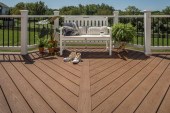
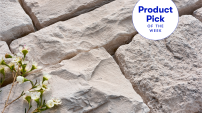
Of all the materials that go into a custom home, it would be hard to find a pair more different than wood and concrete. Wood is light, resonant, flexible, flammable. Like us, it has cells; it was once alive. Wood has more in common with a carrot than it does with a concrete block. In most of North America, wood remains the principal structural material for light construction. And it is fine finish carpentry, as much as any other feature, that puts the custom in a custom home. Concrete, on the other hand, is dense, rigid, inert, mineral. You mix it from a recipe of ingredients and pour it into a mold—like pudding, only harder. Concrete’s qualities have made it the material of choice for our least glamorous applications: sidewalks, bridge abutments, foundation walls.
But in recent years concrete has overcome such prosaic associations to join wood as a high-end finish material. Always a strong supporting actor, it has advanced to cameo appearances in polished slab floors and countertops. And a small but growing number of custom homes take the material further still, casting concrete (as it were) in the starring role.
As happy to be buried as to be exposed, concrete helps this weekend compound achieve a deep connection to its hillside site. For most of the homes on these pages, the choice of concrete as the principal building material addresses a practical concern. Concrete block works well in the desert Southwest, with its bleaching sunlight and hungry termites. In the earthquake-prone Pacific Northwest and hurricane-lashed South Florida, reinforced poured concrete structures stand the best chance of surviving nature’s wrath. But each embraces concrete as more than a practical choice, exploiting the material’s unique visual and tactile qualities and its nearly infinite flexibility. Poured or stacked, board-formed or smooth, painted, dyed, waxed, or left untouched, the concrete in these homes gives a taste of the material’s vast range of expression.
A concrete house, particularly one that celebrates the material as these do, is not for every client—or every builder. Finish applications require a level of care that is miles beyond that necessary for ordinary foundation work. Block walls can be economical, but poured concrete is far more expensive than conventional frame construction. And mistakes … well, let’s not even talk about mistakes. Still, concrete can do more than we commonly ask of it, and some things that no other substance can match. And, like any great actor, it makes its supporting players look good too. Especially wood.