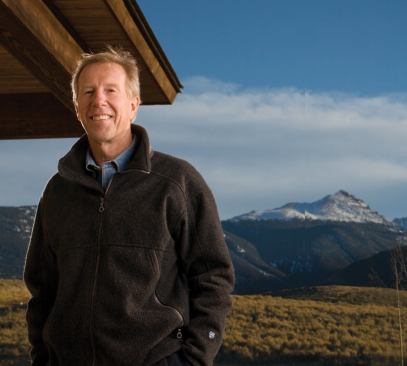
On the wall of Andy Beck’s office hangs a framed photograph of the builder as a young man. In the picture he and another carpenter, both in their 20s and with 1970s hair, sit on a curb taking what appears to be a well-earned lunch break. Above their heads floats a cartoon bubble with the words, “How the hell do we do this?” The photo dates from Beck’s first project, the remodel of an architect’s office. The client later presented the print as a memento, but it was Beck who added the caption. “I wanted to illustrate exactly what we were thinking,” he says. “I was very inexperienced. I had all the enthusiasm in the world, but I had to go home every night and literally read up on what I had to do the next day.”
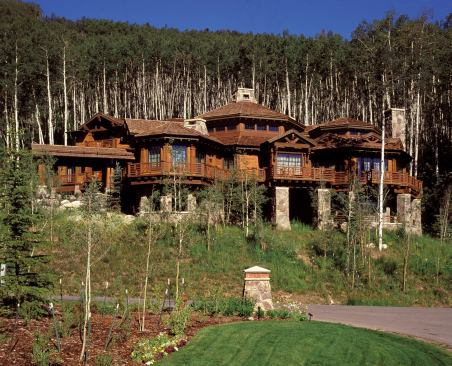
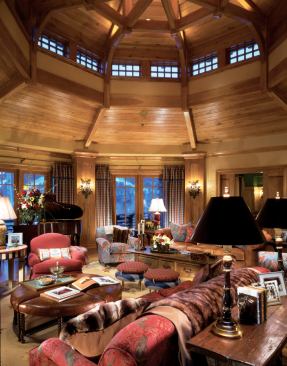
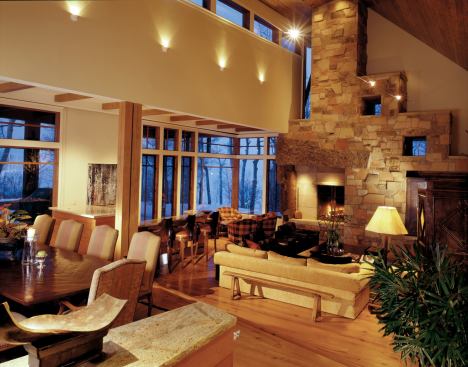
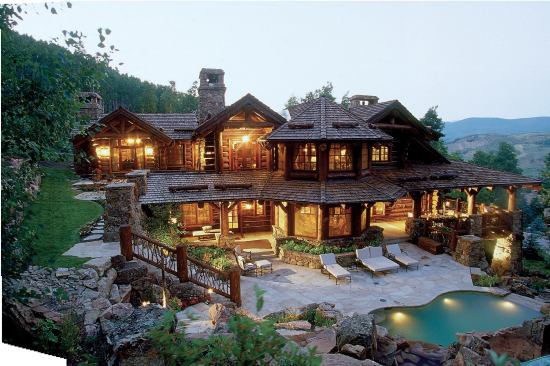
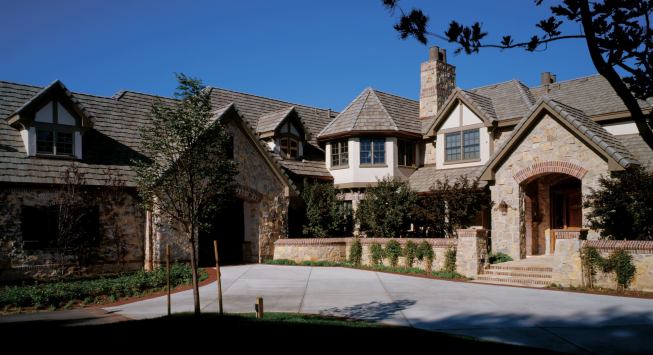
A lot can change in 30 years. Beck, now 61, still carries himself like the ski instructor he was when he arrived here in Colorado’s Vail Valley in 1970. But his company, like Vail and the other ski-centric valley towns, has developed almost beyond recognition. “There’s been a lot of wealth created in this country in a very short time in the last decade,” Beck says, “and a lot of those people are looking for second homes.” Those with enough wealth can find one here. The views are stunning, the outdoor recreation opportunities are unlimited, and the price for high-end-development lots runs upward from $1 million. Beck is on a short list of potential builders for any top-shelf project in the Valley, so new homes of 10,000 square feet and square-foot costs from $400 to $1,200 have become his meat and potatoes. And because the area Grand Finale attracts clients from across the country, Beck’s name gets passed around in the wealthier circles of Chicago, New York, and Boston.
Beck Building Co. maintains three offices, employs between 50 and 60 people, supports a subcontractor community several times larger than that, and generates some $40 million in annual volume. And Beck himself has come close to completing the arc of a successful career. Having started from scratch and built a thriving business, he is now preparing that business to run without him.
To illustrate how far the work itself has evolved, Beck suggests a visit to one of his current projects. Leaving the company’s office in the town of Avon, just east of Vail, Beck points his black BMW wagon toward an exclusive planned community a half-hour’s drive away. A 10,000-acre “heritage ranch” with a working cattle operation and extensive equestrian facilities, the development will top out at only 50 houses. Lots, up to 300 acresin size, range in price from $1.6 million to $2.5 million.
Beck stops at the main gate to pick up company vice president Bryan Brubaker, who is also one of two project managers on this job, and punches a code into the main gate’s keypad. “We’re going to drive in about eight miles from Highway 6,” Beck says. The dirt road-an old stagecoach route-winds through high desert sagebrush and aspen groves. Cattle meander across the road, which climbs from an elevation of 6,400 feet above sea level to about 9,000 feet. Views from the building site stretch for miles to the Gore and Sawatch ranges, snow-capped even in mid-September. There isn’t another building in sight.
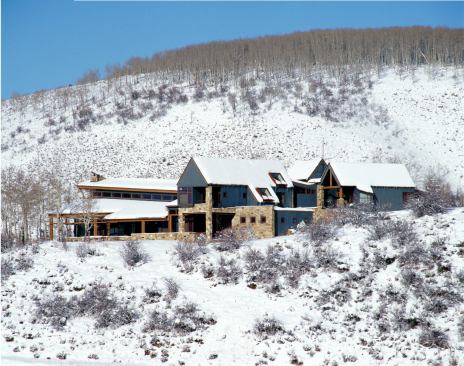
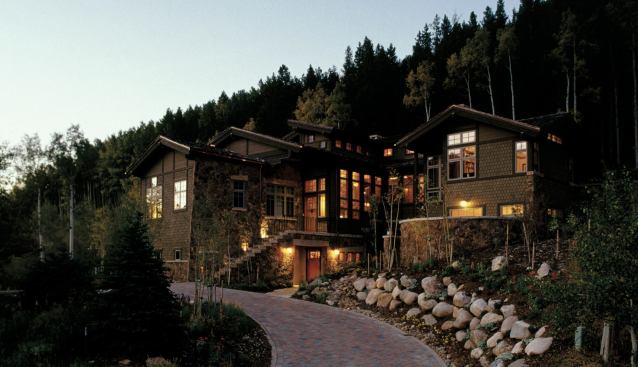
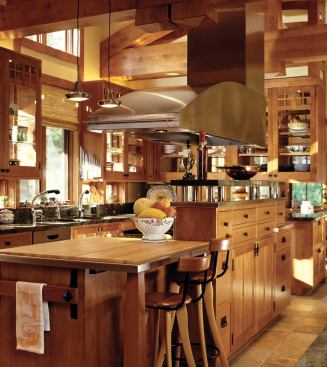
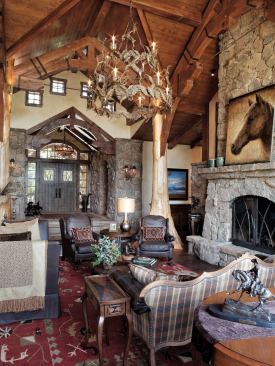
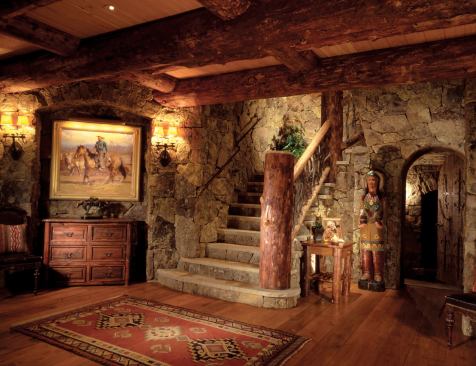
Despite the fact that the project is nearing completion, pickups line the road to the house. Six porta-potties stand off to one side, and enough racks of potted plants fill the circular driveway to make one wonder if the landscapers left anything at the nursery. The building compound consists of a sprawling ranch-style vacation home and an earth-sheltered guest house. At 26,000 square feet, the complex defies any attempt at brief description, but a few details stand out. The great room is framed with Douglas fir posts and truss members up to 16 inches by 16 inches in section (few or none of which carry any load; hidden steel members do the structural work). The kitchen features a 7-foot-diameter, stone-clad pizza oven, the guts of which weigh 4,700 pounds and had to be lowered into place with a crane before the roof was framed. An indoor playground slide allows children to zoom from the main floor to the lower level. The powder room off the main house’s entry tower contains a pedestal sink of carved onyx.
The main house connects to the guest house via a 60-foot-long vaulted tunnel under the entry courtyard-“engineered to carry a fire truck,” notes Brubaker-complete with cast-iron electric torches hanging from the walls and a hidden doorway to a secret room. The guest house, dubbed the Hobbit Hole, lives up to its name with a round entry doorway, round casement windows, wormholed antique larch flooring from Austria, and castiron pots hanging on hooks by the stone fireplace.
Despite the medieval-fantasy trappings, though, the Hobbit Hole carries a load of high technology. Under an operable copper-domed observatory roof, a technicianis installing an astronomical-research-quality 16-inch-diameter telescope. “Almost all of our customers are colleges and universities,” the technician says. “I can count on one hand the number of individuals who have bought telescopes from us in the last 25 years.” With its computerized control and photography systems, the unit runs about $150,000.