1
of 3
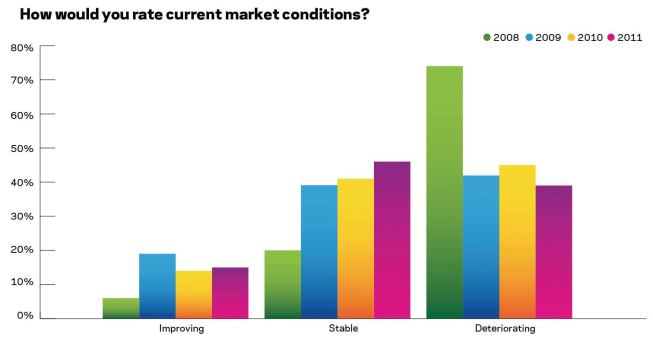
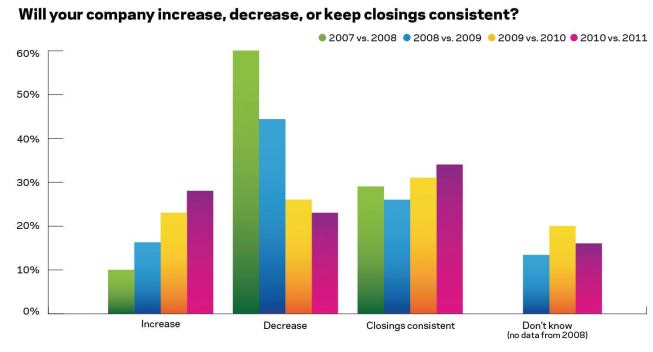
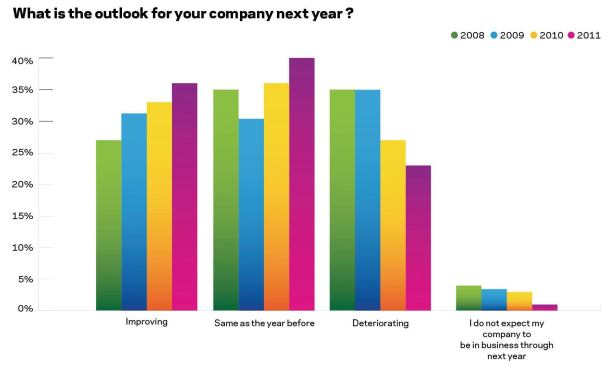
Stopping the Slide More builders still see conditions getting wo…


John Gress/Sublime Management
Shifting Down Builder Bob Henderson has fallen back on remodeling and commercial work.
Stopping the Slide More builders still see conditions getting wo…
For several years, Builder has contacted a few survey respondents for follow-up interviews. This year, we decided to get back in touch with some builders we’ve spoken to in years past.
By 2008, husband-and-wife team Mike and Abbie Andersen had laid off four employees, and the company was down to Mike on site, and Abbie in the office. From building six specs a year, Andersen Homes, based in Gig Harbor, Wash., had shrunk to a one-man remodeling outfit. And the Andersens were stuck with three permitted lots and two completed spec houses (which they had decided to lease). To add to their challenges, their bankers were being sticky about rolling over the construction loans on the leased properties.
“I thought 2009 was going to be bad,” says Abbie, “and it was bad. But 2010 was worse. By the middle of 2010 we had completed the major remodels and additions that we had in the works, and the second half of 2010 was just chasing after leads.” Exploring a new niche, Mike started to take on insurance work.
But this year, things are looking up: Andersen Homes is back to building. “We’re under contract right now for five custom homes,” says Abbie. “Three are already in progress. The other two will start within eight weeks.” The Andersens have hired a project manager to help Mike run jobs, and if things keep improving, they may add another employee.
But will things keep improving? Abbie’s cautious. “We feel very fortunate that we have some work,” she says. “But there is still not a feeling of stability in our area. I get calls every day from people who are still out of work. And I ask the subcontractors, in particular, whether they think things are getting better. And sometimes the answer is no—they think it’s getting worse. So I’m trying to figure out if we’re just lucky right now? Or is this truly the beginning of a recovery?”
And these days, Mike says, building houses is less fun. “Everybody wants to fine-line you,” he says. “Customers are smart, they know the conditions of the market.” With many clients paying out of pocket, the scrutiny is intense: “You’re spending a lot of time pricing and repricing,” says Mike, “and you have to work a lot harder to make a living.”
“These are custom homes,” says Abbie, “and none of them is under $700,000. But with every single light bulb, the price is scrutinized. People know that the industry is bad, and they want really good deals on everything. They expect it.” But she says, “We understand that side of the fence, too. I felt the same way last year when we did some work on our own home. These people are spending their own money to build a house for $700,000 that’s really only worth $500,000 on the market. Every penny counts.”
In Mequon, Wis., an affluent suburb of Milwaukee, builder Bob Henderson feels the same pressure to cut costs. But unlike the Seattle area, he says, his market shows no sign of bouncing back. When we talked to Henderson two years ago, he had sold his last spec house and was working on a whole-house makeover. New construction had stopped, but remodeling was taking up some of the slack.
Today, Henderson’s business is surviving—but it’s still tough. “The dollar volume has continued down,” he says. “In 2004 and 2005 we had $4 or $5 million in sales, and most of that was new homes—less than a million was remodels. For 2011, we’re doing about a million two in sales, and half of that was one $575,000 custom home. The rest is all remodeling.”
The half-million-dollar home represents Henderson’s traditional niche during good times—one-of-a-kind custom homes. But that sale was an odd occurrence, he says—buyers with equity and savings who were able to quickly sell, and who could finance a new home only because they bought their lot outright and brought more than $100,000 cash to the table for the new house.
“Our target buyer has always been the move-up buyer, moving into their second or third home, and wanting a unique home,” says Henderson. “But that market is dead in the water, because the buyers who want to move can’t sell their existing homes, and they can’t get financing for a new house either. Appraisals are really hard right now, because the comparable sales are being fed by prices that are on a downward spiral—not even a constant level. Everything is down.”
Remodeling, meanwhile, has been hand-to-mouth. “Last winter, we were doing $20,000 kitchens and baths,” Henderson says. “Those aren’t our target jobs—we want structural additions, because we’re a design-build firm. But we said, what else are we going to do?”
Against that backdrop, networking and reputation have been lifesavers for Henderson’s company. Henderson is just wrapping up a $300,000 commercial build-out, brought in by a former client. “We’re trying to move into more commercial work,” he says. “We just signed a design agreement for a 6,000-square-foot office building for a local ophthalmologist”—again, work that came in through a referral from a former custom home client.