Demographics and drama don’t normally go together.
Sometimes, though–like a 14-inning, superbly pitched, scoreless tied baseball game, that’s decided on one fateful pitch–demographics can be a thrill.
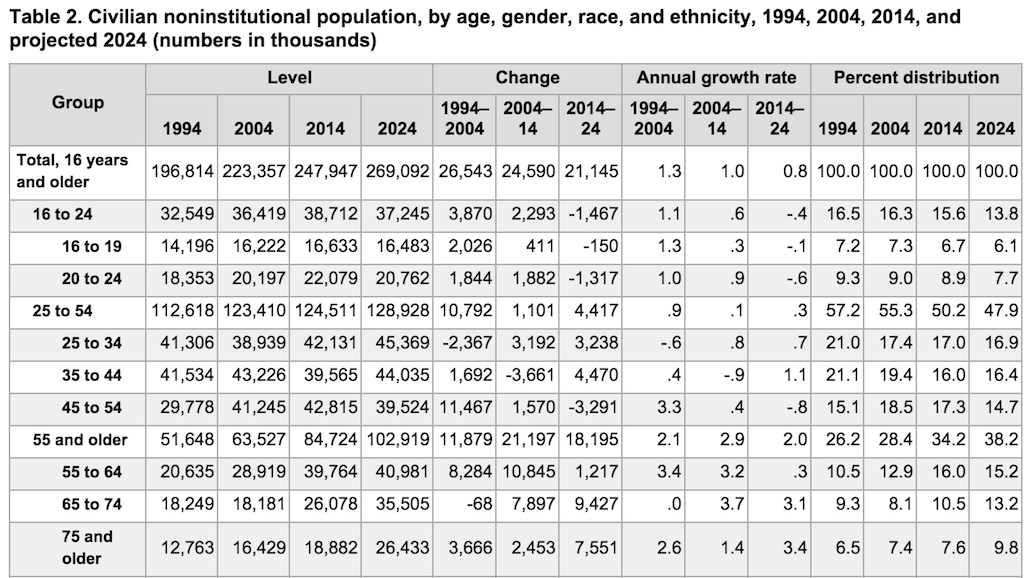
Look, for instance, at this observation by New Strategist Press editorial director Cheryl Russell, “Boomers Missing Go-Go Years of Retirement,” based on new labor force projections by the Bureau of Labor Statistics.
If labor force participation among older adults is rising, it means that these folks are not going to be able to enjoy retirement as free-spirited, golf-or-tennis playing, leisure-living souls, right?
Russell’s keen eye for the data is dead on. Labor force participation rates are picking up, for men, for women, for 60-plus, and for 65-plus, and very likely, she’s absolutely right, and that has implications for businesses whose audience target is that well-heeled, aging adult with time on his or her hands. Russell writes:
Industries that depend on go-go retirees—casinos, travel, RVs, golfing communities—may want to rethink their strategy as growth in the active retirement market will be much more modest than once anticipated.
The drama is in this. Baby Boomers, from the time of their births in the latter 1940s through the early 1960s, tend to change things up. They did it as kids, as teenagers, as young adults, and as middle-aged citizens. Chances are, retirement’s traditions in age, values, preferences, and behaviors are going to be different with this generation, because that’s their track record.
Yes, they may be working later into their careers than former generations, because. Financially, they may have been less prudent than former generations, and may be less prepared to move into fixed-income living based on their own savings, investment, and pension planning.
However, and this is important to those who’re planning homes, neighborhoods, and strategies aiming at the current and near-future 55-plus adult. Work may just be the new go-go activity, and, what is more, may put more discretionary wherewithal in these folks hands than they would have had if they retired.
In other words, a shift in labor force participation over the next 10 years that suggests that people in their 60s and 70s will be working full-time is not, to us, tantamount to the end of go-go living.
It’s the start of go-go living that’s probably more jobs center-centric. Livelihoods and lifestyle will mesh to a greater degree. Homes and neighborhoods that offer both time to keep earning and the “time-of-your-life” will come through as the most valuable options for people who have no intention of retiring at age 62, and consider that an opportunity to have more fun.