Architect Jeff Guggenheim of Portland, Ore.’s Guggenheim Studio bristles at the shorthand that tends to dominate design conversations. “People like to put out these labels, like Scandinavian or Japandi, to describe a certain aesthetic,” he says. “But what’s most interesting is when you get below the surface. What I think people are really responding to is how design is influenced by the natural environment and the materials that are readily available. Wood, stone—materials that really root the design in a certain place.”
That philosophy has guided Guggenheim’s work, particularly in his Hillsdale project in Portland, where global traditions meet local craft.
The Hillsdale Project
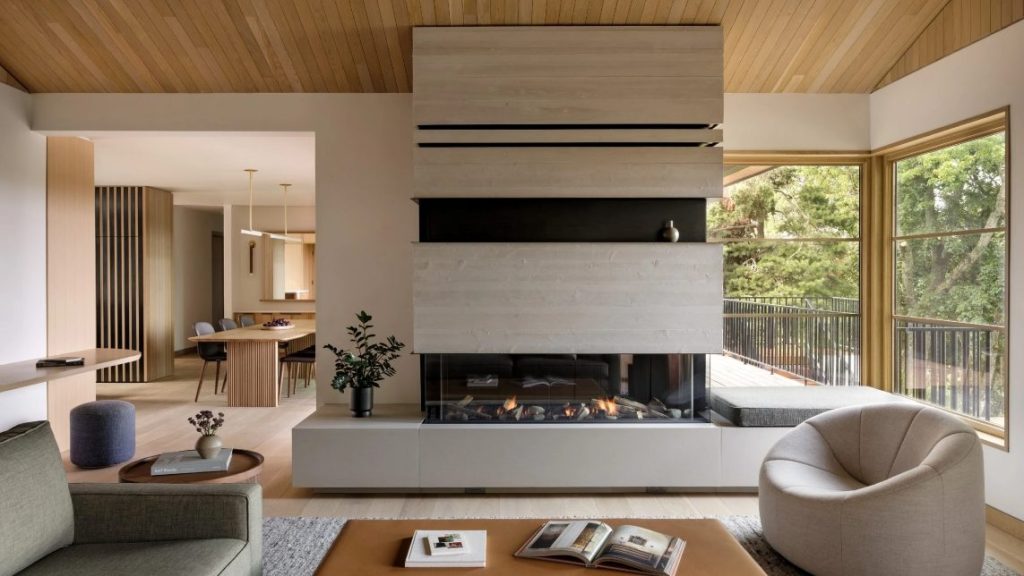
Clad in warm woods and anchored by clean-lined stone details, the home draws inspiration from Japanese joinery and Scandinavian simplicity while remaining distinctly Pacific Northwest.
Windows play a central role in that balance. Expansive panes frame views of the surrounding greenery, dissolving boundaries between inside and out while maintaining a sense of calm enclosure. Guggenheim specified large window walls that meet cleanly at corners, emphasizing precision detailing and allowing light to wash deep into the interiors. Deep overhangs and carefully considered orientations ensure the glass works with Portland’s climate—capturing winter sun while shielding interiors during the brighter summer months.
Inside, exposed wood grain becomes a feature rather than something to conceal, creating a sense of warmth and authenticity. Trim profiles are kept minimal so that the windows read as part of the architecture rather than applied decoration. Built-in cabinetry and furniture-like detailing highlight the skill of local tradespeople, whose contributions Guggenheim credits as central to the project’s success. “As designers we have a responsibility to respect what craftspeople can do and listen to them,” he says. “It’s not a top-down process.”
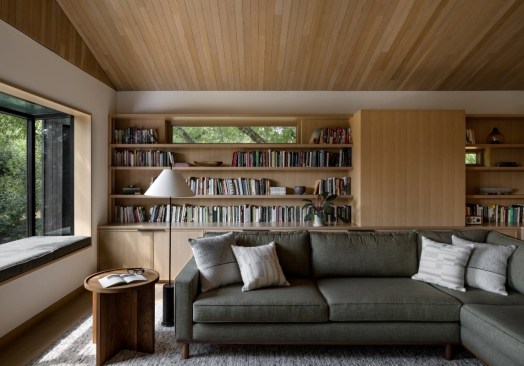
The Hillsdale project in Portland, Ore., by Guggenheim Studio. Photo by Miranda Estes.
Collaborating with Builders
For Guggenheim, collaboration with builders is not just practical, it’s fundamental to good design. He stresses that the best results come when architects listen to the people who know materials most intimately. “Woodworkers and carpenters have spent years learning their craft. For them, making something isn’t just a job—it’s an extension of themselves,” he says. “That’s the mark of a good craftsperson.”
Guggenheim views construction as a dialogue. He relies on trades to suggest the joinery, finishes, and installation methods that make a design both elegant and durable. “Builders recognize when a material wants to behave a certain way. You don’t want to force it into something it isn’t,” he explains. That philosophy informs everything from the way glass met wood frames to how cabinetry was detailed in Hillsdale.
This approach gives builders real ownership of the finished product. “When you invite craftspeople into the design process, they take pride in the outcome. The details are sharper, and the home carries a level of care you can feel.”
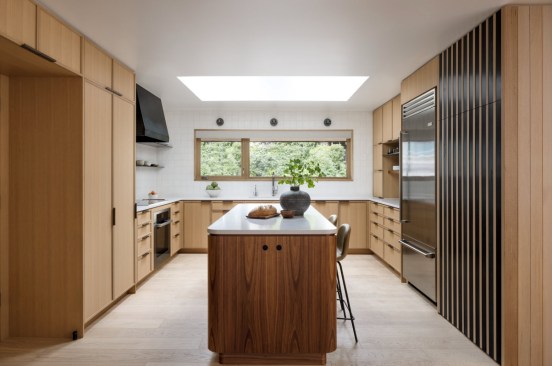
The Hillsdale project in Portland, Ore., by Guggenheim Studio. Photo by Miranda Estes.
Framing Craft and Connection
The Hillsdale home demonstrates how windows are more than just functional—they shape how a house lives and feels. By partnering with Marvin, Guggenheim was able to achieve the clean sightlines, natural light, and enduring performance the design demanded. For builders, it’s a reminder that the right window choice can bolster design integrity, connect interiors to the landscape, and ensure homes perform beautifully for decades.
Discover how Marvin windows can help you bring custom-crafted quality and connection to your next project. Learn more.