Hot Spots

In kitchen design, there's always something cooking.

16 MIN READ

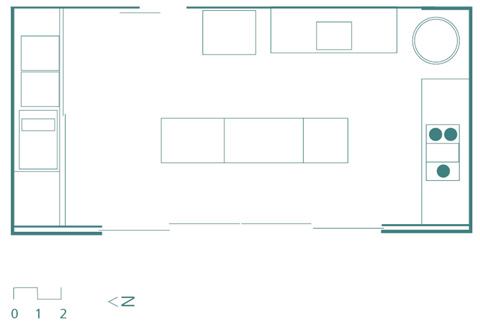
Three-Part Harmony The old formula of separate boxes for kitchen, dining, and living rooms long ago gave way to floor plans that blur the lines between cooking, dining, and living spaces. This project takes the new paradigm a step further, with a kitchen that serves as the hinge point between two living/dining areas, one formal and one informal. Architect Rex Hohlbein tied the kitchen more closely to the informal realm by means of visual cues: a change in floor material—from ebony-stained oak in the formal dining/living space to concrete—and a framework of steel beams overhead. But it remains equally convenient to the formal side, a high back-splash blocking the counters from view without impeding functional access.

The kitchen’s soapstone counters are a visual cousin of its concrete floor, and the fir cabinets seem a natural extension of the building’s fir plywood walls and ceiling. The cabinetry in the main work area maintains a low center of gravity, with only a set of open shelves rising above counter height. With three walls “missing” and no wall-hung cabinets, storage might seem in short supply, but Hohlbein made up the difference with a long wall of floor-to-ceiling cabinets. Extending from the work area to a courtyard door, and shielded from the family room by a room divider that provides additional storage, this “panhandle” constitutes a walk-through pantry—and a brilliant stroke of space planning.

CH060401077L22.jpg Photographer: Steve Keating Builder: Fulks Inc., Seattle; Architect: Rex Hohlbein Architects, Bothell, Wash.; Project size: 250 square feet; Construction cost: Withheld; Photographer: Steve Keating. Floor Plan Builder: Fulks Inc., Seattle; Architect: Rex Hohlbein Architects, Bothell, Wash.; Project size: 250 square feet; Construction cost: Withheld. A framework of structural steel overhead helps define this kitchen, which is open to both formal and informal living/dining areas. Builder: Fulks Inc., Seattle; Architect: Rex Hohlbein Architects, Bothell, Wash.; Project size: 250 square feet; Construction cost: Withheld; Photographer: Steve Keating. Project Credits:
Builder: Fulks Inc., Seattle; Architect: Rex Hohlbein Architects, Bothell, Wash.; Project size: 250 square feet; Construction cost: Withheld; Photographer: Steve Keating.

Resources:
Dishwasher: Miele; Garbage disposer: In-Sink-Erator; Kitchen cabinets: Whidbey Designworks Inc.; Kitchen plumbing fittings/fixtures: Grohe, Kohler, and Whitehaus; Lighting fixtures: Bruck; Oven: FiveStar.

Details
In plan, this kitchen occupies one corner of a simple rectangle, but the framework of exposed steel beams overhead provides distinct subdivisions within the space. Most striking is the cooking niche created by a 16-inch-deep I-beam and a soffit of fir joists. In a kitchen with only one wall, this configuration conveys a comforting sense of enclosure, an effect that is heightened by the contrast of daylight from the clerestory windows above.


About the Author

Bruce D. Snider

Bruce Snider is a former senior contributing editor of  Residential Architect, a frequent contributor to Remodeling. 

Upcoming Events

  • Happier Homebuyers, Higher Profits: Specifying Fireplaces for Today’s Homes

    Webinar

    Register for Free
  • Sales is a Sport: These Tactics Are the Winning Play

    Webinar

    Register for Free
  • Dispelling Myths and Maximizing Value: Unlock the Potential of Open Web Floor Trusses

    Webinar

    Register for Free
All Events