
Character Study
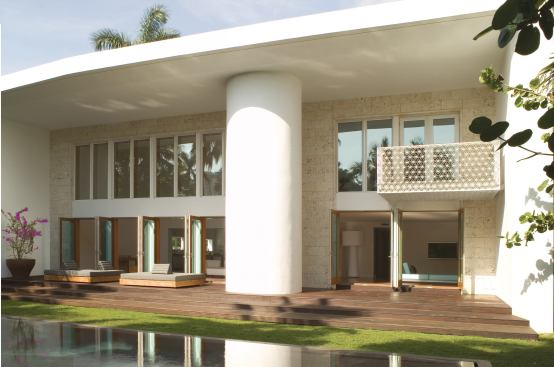
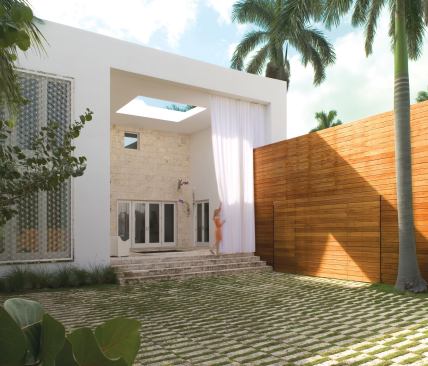
We tend to associate remodeling with older houses. But sometimes newly built residences need a makeover just as badly as their 30-, 50-, or 100-year-old brethren. This 11,000-square-foot Los Angeles home was just four years old when the current owners bought it. They didn’t want or need more square footage; rather, they envisioned a different layout within the original Mediterranean-style shell. And they hoped to gain some of the old-house character and charm the existing house lacked.
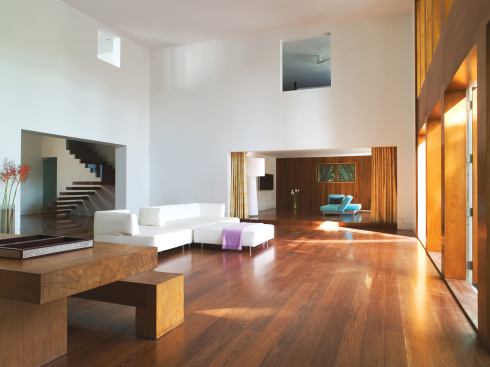
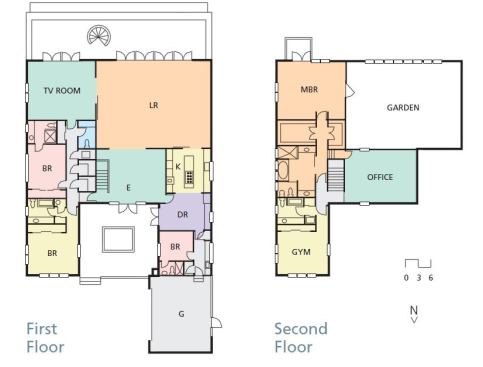
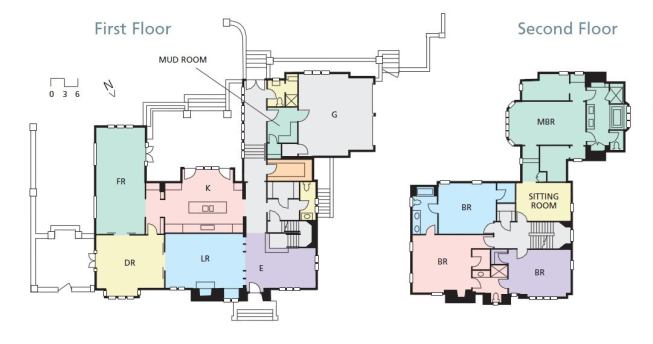
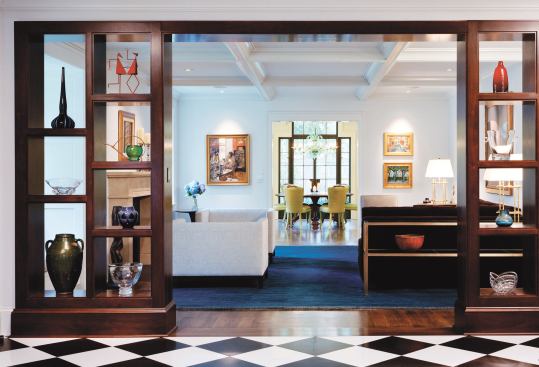
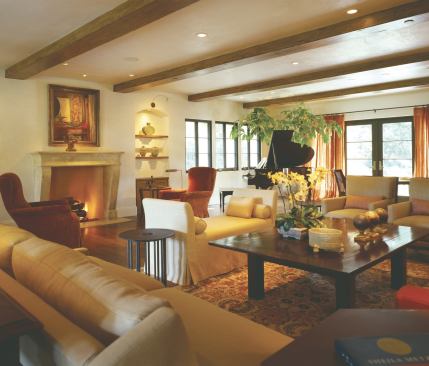
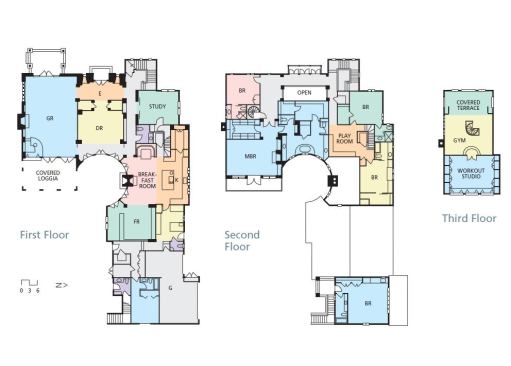
Architect Richard Landry believes remodeling a newer house carries some advantages. “The scale of some of the rooms is better than in an old house,” he says. “The old floor plans don’t work very well and they have low ceilings.” He and his associate Brian Pinkett turned three existing first-floor spaces—a study, gym, and mechanical room—into one large living room that opens onto an expanded loggia. They moved the dining room from the side of the house to a position of greater prominence behind the foyer, and shifted the study to the former dining room location. Other changes included a revamped master suite with a tub overlooking the terrace, and a third-floor exercise loft. The new floor plan contains fewer load-bearing walls than the original, so builder Mike Galper shored up the home’s frame with steel beams.
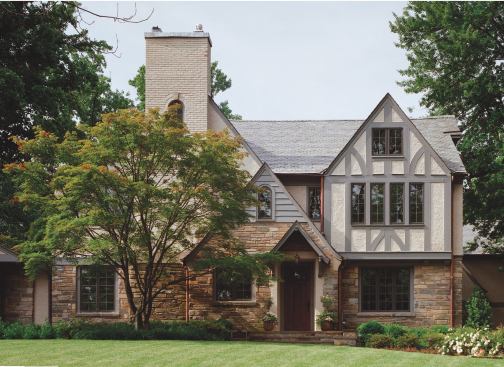
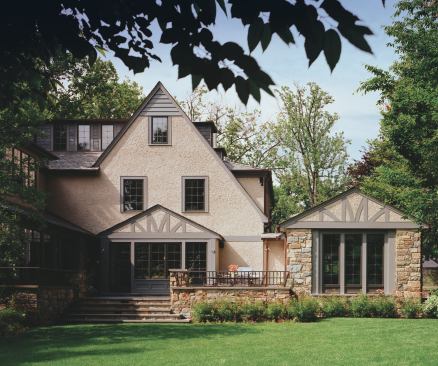
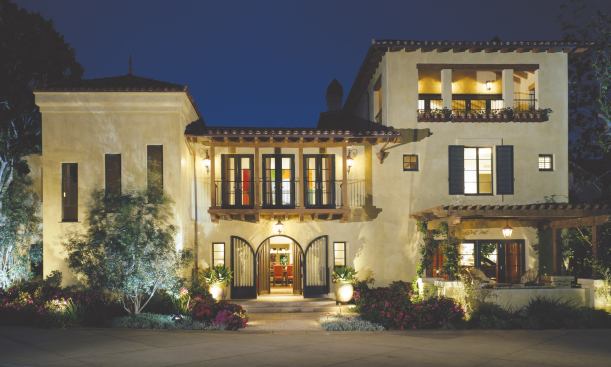
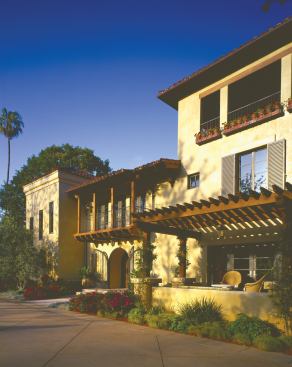
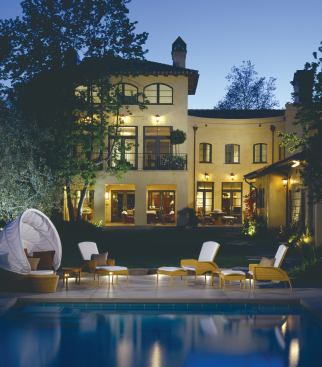
Landry and Pinkett skillfully applied exterior detailing to transform the house’s appearance without major external changes. “The house had good bones that we wanted to keep,” says Landry. They layered shutters and flowerboxes on top of those bones, giving the elevations more texture. A new front door emphasizes the home’s romantic arched entry, while a balcony overhead shades and protects it. The architects also switched the stucco’s color from a greenish gray to a warm, sandy hue. Interior designer Luis gaga worked with Landry and Pinkett to remake the interiors, resurfacing the walls and ceilings with integral plaster. Wood ceiling beams and floors of French limestone and distressed walnut add patina, as do new cabinetry, molding, and fireplace surrounds.
According to Galper, removing the original house’s non-toxic finishes was the remodel’s biggest challenge. “Everything was waxed instead of urethane or lacquer finishes,” he says. “So we had to do a lot of stripping before putting on new finishes. You can’t sand them because you push the wax into the grain of the wood.” Like Landry, though, he sees the positive side of remodeling a newer house. “You hopefully find fewer surprises,” he says. “In houses built in the 1930s, ’40s, and ’50s, you never know what you’re going to find.”
Project Credits
Builder: Galper Construction, Culver City, Calif.
Architect: Landry Design Group, Los Angeles
Interior designer: Luis Ortega Design Studio, Beverly Hills, Calif.
Landscape architects: Orchids de Oro, Culver City, and Jacqueline Tone, Burbank, Calif.
Project coordinator: Kathleen Rogers D.E.S.I.G.N., Los Angeles
Living space: 11,000 square feet
Site: .6 acre
Construction cost: Withheld
Photographer: Erhard Pfeiffer
Resources: Bathroom plumbing fittings/fixtures: BainUltra, Kallista, Six Eleven Ltd., Toto, and Waterworks; Countertops: Walker Zanger; Dishwasher: Miele; Elevator: CemcoLift Inc.; Entry door: Craftsmen in Wood; Kitchen cabinets/interior doors: Silverstrand; Kitchen plumbing fittings: KWC; Lighting fixtures: Artemide and Holly Hunt; Oven: Thermador; Patio doors/windows: Old English Milling; Range: Viking; Refrigerator: Sub-Zero.