Urban Infill Gets a Spacious Update

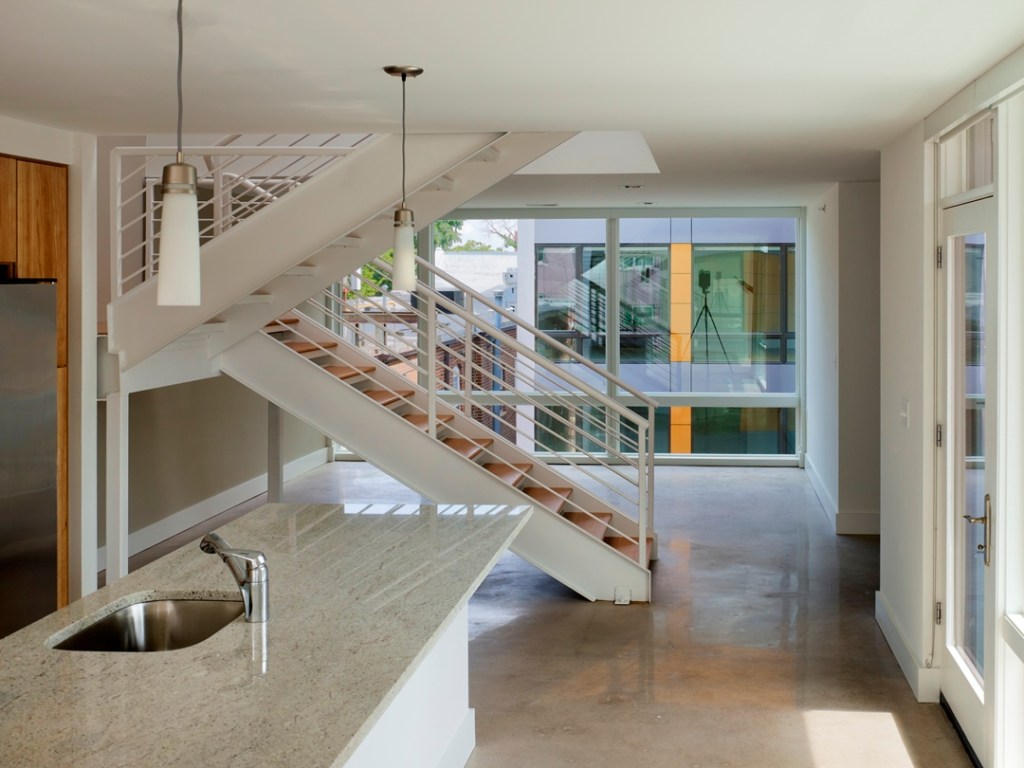
A vibrant multifamily development by Suzane Reatig Architecture shows that even in dense quarters, multifamily design can evoke single-family living.

2 MIN READ
625 Rhode Island Avenue, Architect: Suzane Reatig

Alan Karchmer

625 Rhode Island Avenue, Architect: Suzane Reatig

625 Rhode Island Avenue, Architect: Suzane Reatig

Alan Karchmer

625 Rhode Island Avenue, Architect: Suzane Reatig

Reatig and her team drew inspiration for the project design largely from its unique lot. “The configuration of the site was key for us, because it’s this long, triangular site that gets narrow toward the back. We had a lot of fun studying different configurations that would fit and make sense,” says Megan Mitchell, an associate at the firm.

Getting In On the Ground Floor

One of the primary challenges of infill development is finding available land. In this area, Reatig gained an advantage through an early job. After she designed the Metropolitan Community Church in D.C., another congregation, The United House of Prayer for All People, asked for her assistance in providing parking spaces for their new church.

"They bought a bunch of properties there in the same block for parking," Reatig says, adding that since development was quiet in the area at the time, the organization was able to purchase the land for a low price.

Reatig went to the Washington, D.C., zoning board and secured the permits to provide parking spaces on the church lot, leaving the newly acquired land available. "They had all of this land, and once they didn’t need it for the parking, they had to develop it."

The church later commissioned Reatig to create housing developments on those parcels of land. The most recent is In Living Color, which joins three other Reatig-designed developments on the same block. Reatig has built a strong presence in Shaw–the projects, and their effect on neighborhood revitalization, are collected in Reatig’s first book, A Clear View, being published next month.


“When you do urban planning, you don’t start with the buildings,” Reatig says. “This lot was surrounded by two alleys and a street … so we recessed the building from the alley and did this garden that really made the project.”

Along with the garden, a central courtyard and green roof that includes various semi-private gathering spots facilitate outdoor living. The roof wasn’t originally designed to be occupied, Mitchell says, but the team so loved the views that they bargained with the contractor to find a way to include livable space.

To help the building mesh with its vibrant neighborhood, the team included brightly-colored rainscreen panels imported from Netherlands-based manufacturer Trespa. Unlike painted façades, the laminate panels will stand up to the elements without fading, Reatig explains, adding to the block’s dynamic appeal.

Want to see more of this project? Take a video tour of In Living Color with BUILDER magazine:

About the Author

Laura McNulty

Laura McNulty is senior managing editor for Remodeling and ProSales magazines. She formerly served as an associate editor for Hanley Wood's residential construction group. Contact her at lmcnulty@hanleywood.com.

Upcoming Events

  • Happier Homebuyers, Higher Profits: Specifying Fireplaces for Today’s Homes

    Webinar

    Register for Free
  • Sales is a Sport: These Tactics Are the Winning Play

    Webinar

    Register for Free
  • Dispelling Myths and Maximizing Value: Unlock the Potential of Open Web Floor Trusses

    Webinar

    Register for Free
All Events