Harry Whitver
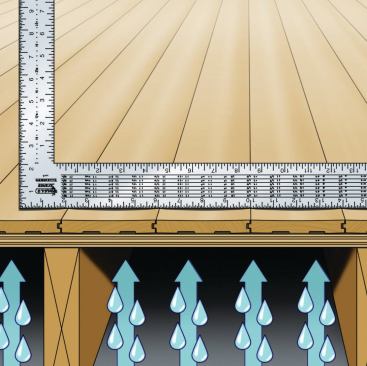
Uneven Expansion: Moisture in the subfloor, coming from a humid …
Wood flooring, as everyone knows, is beautiful, sustainable, and durable. But wood is a natural material, and it will move in response to changes in moisture content.
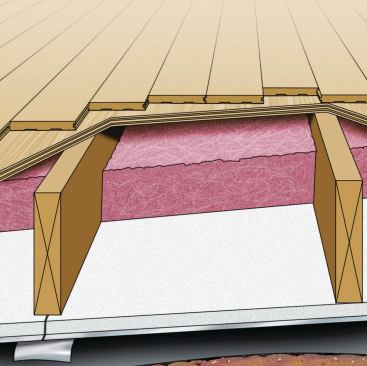
In a conditioned building where relative humidity is stable, you can trust wood flooring to stay flat. But if there’s a moisture source from underneath the floor—such as a damp crawl space—the underside of the wood flooring can take on moisture and expand, while the upper surface, exposed to drier air, does not. The result is cupping of the individual wood flooring strips. In fact, cupping can happen simply because the plywood subfloor is at a high moisture content when you nail down the flooring—perhaps because of rain during framing.
To prevent the problem, make sure the house has good vapor barriers between the ground and the framing. Install a vapor barrier under the foundation slab, or between the framing and the vented crawl space. Check the subfloor moisture content before installing finish floors (it should be 12 percent or less). If floors have already cupped, eliminate the moisture source and allow the wood to stabilize before you sand the floors again—otherwise, when the moisture does dissipate, the newly sanded floors could shrink back down and become convex instead of flat.