1
of 14




Eric Staudenmaier
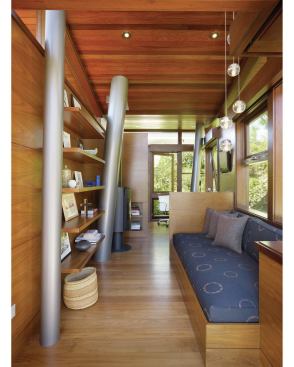
Cedar siding and mahogany floors recall a tree house kind of sty…

Eric Staudenmaier
Cedar siding and mahogany floors recall a tree house kind of sty…
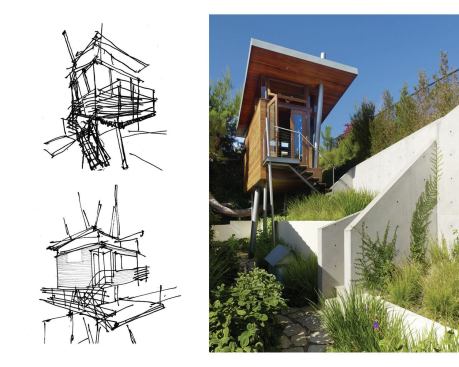
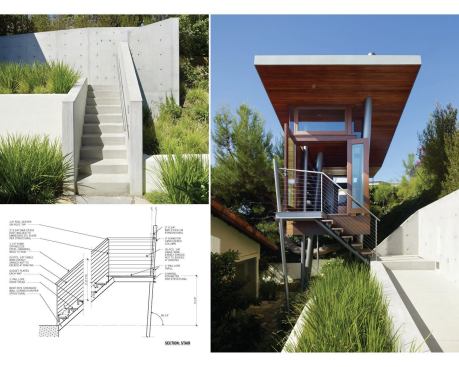
On a tight, sloped lot, this treehouse is the type of project that makes builders say unpublishable things about architects. “A few bids came in ridiculously high,” recalls architect Christopher Kempel. Because of the structure’s canted columns and floating butterfly roof, most contractors didn’t want to touch it. But builder Tom Preis dove right in, says Kempel. “I’ve been in business almost 30 years, and I’d never seen anything like this before. I had no idea how to price it, but I knew I wanted to build it, and it ended up being great for everybody,” says Preis.
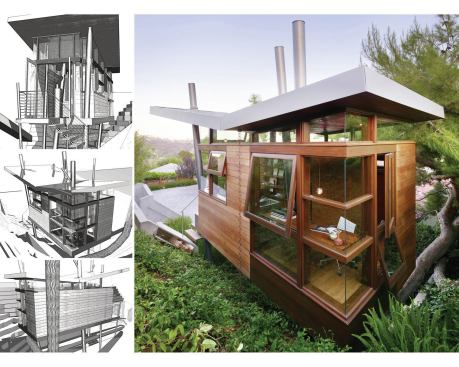
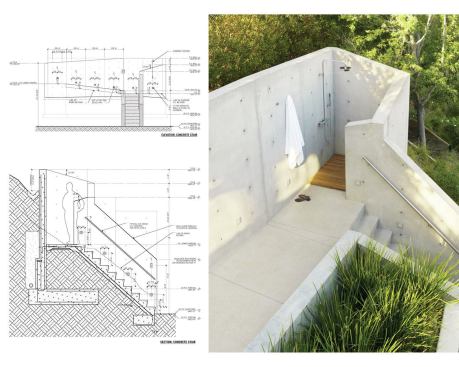
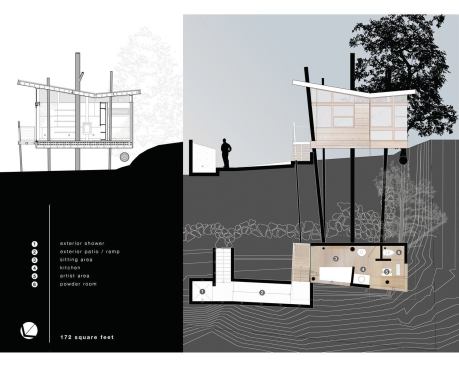
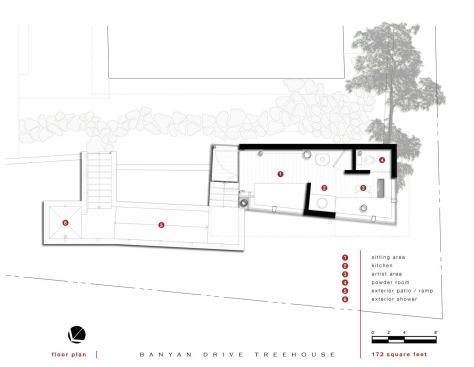
At just 172 square feet, the treehouse is the kind of hideaway many dream of: a spot to draw, write, read, or nap. There’s electricity, a powder room, outdoor shower, and a sprinkler system (the area is wildfire-prone). The canted steel support columns do double duty as plumbing pipes.
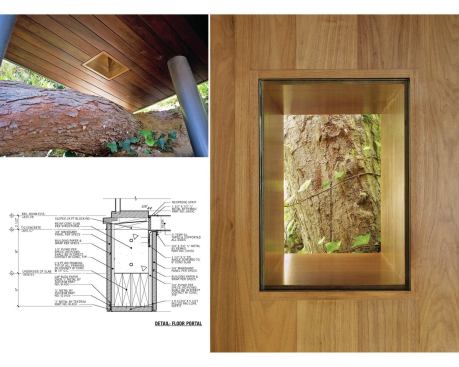
The structure is inspired by the client’s love of treehouses and draws inspiration from treehouses past. But rather than actually being supported by a tree, this structure hews close to one. It hovers over an Aleppo pine that fell when it was young and survived, growing horizontally and then vertically up the hillside (the tree trunk can be seen through a small window in the treehouse floor).
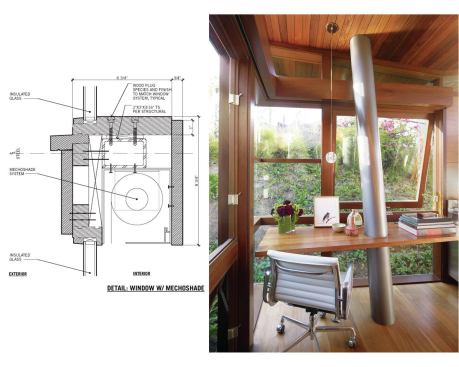
The butterfly roof, clerestory windows, and mahogany-framed windows were taken from a design Kempel had done for the couple years earlier—a house that never got built. “The treehouse was one part of the dream,” says Kempel. “The other part was realizing the unbuilt home through the treehouse.”
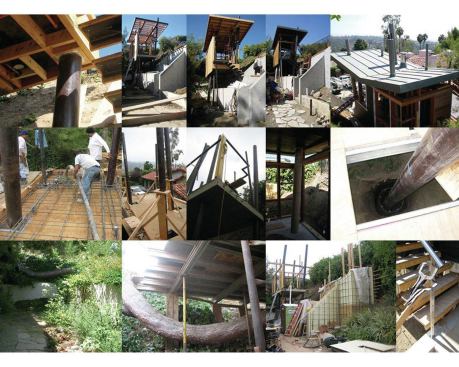
On Site “We did drawings that described the cant, angle, and rotation of the columns in plan and elevation,” says Christopher Kempel. But builder Tom Preis had to interpret how that was going to get done (CAD was a big help). To complicate matters, the floor of the treehouse is a concrete slab that had to connect and stand between all five columns. A floating platform became the formwork for the concrete slab floor.