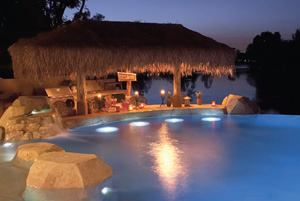
Pool designer/builder: Brian Cullingworth Custom Pools & Spas.
Your clients may want a different experience: There’s something unique about swimming through deeper water to reach the stools. It gives the area a more remote feeling. If you do this, create a large shelf in the deep end that will serve as a base for the stools. You don’t want barstools to rise 8 feet out of the pool floor as this is neither structurally sound nor safe.
On the wet side. Design and build the bar and stools so they are comfortable, convenient, and safe for swimmers.
First, don’t cantilever the counter too far into the pool. If you have too much overhang, a swimmer could get caught there. Cullingworth only projects the counter 6 inches on the wet side. Also, be sure to use a bullnose material around the edges, so nobody hurts themselves by hitting a hard corner. It’s a good idea to give the stool seats a bullnose edge as well.
In addition, be sure to consider how wide to make the stool seats. Some builders like them to measure at least 14 inches in diameter, while others start at 18 inches. You then want to place the stools at least 18 inches apart.
Cap the stool with a surface that is as smooth as possible to prevent bathers from scraping the backs of their legs or snagging their bathing suits. For this reason, many experts prefer granite, which also makes the ideal counter material since it is attractive, durable, and stain-resistant.
If the client doesn’t want the added expense, Oliver will use mosaic tile. His crews leave the tightest grout joints possible and make sure they sit slightly lower than the tiles. This minimizes contact with the grout, which is porous and more likely to cause snags.
When deciding the elevation of the stools, you should consider two things: First, allow adequate space for people’s legs between the top of the stool and the bottom of the bar counter. Cullingworth leaves at least 8 inches, but for clients with bulkier legs, you may need more. Next, find out how much water coverage the homeowners want. Oliver actually prefers to set his stools 15 to 16 inches below water level, so that bathers are submerged to just above the stomach.