Seven Steps to Creating a Xeriscape Garden
Conservation for Water-Rich Regions Xeriscape was a concept developed for the desert, but its water-conserving principles can be modified for the rest of the United States. In the Northwest and the eastern half of the country, with its layered vegetation and spongy forest soils, the focus shifts away from low-water-use plants. What’s more important in these regions is to create landscape zones that absorb water and send it down into underground streams. “You conserve water by keeping it from running off your property,” says landscape architect Carol Franklin of Andropogon Associates in Philadelphia. “If we have groundwater, our vegetation will be fine in dry times. If we never replenish our groundwater, it will be like an empty bank account.”
A rain garden is one way to put money in the bank. Typically, it’s a little depression in the landscape with 2 to 3 feet of gravel beneath, then a layer of rich soil planted with water-loving shrubs such as winterberry, viburnum, willows, and magnolias, and perennials such as wildflowers and ferns. These gardens catch and hold water so it can seep into the ground. What’s more, they help protect rivers and streams from storm water pollution.
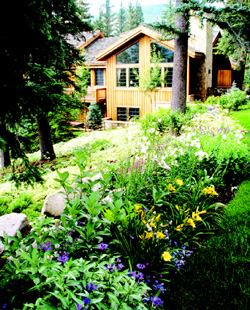
Preserving the forest on a lot, or reestablishing it in a small space, even if it’s only 10 feet by 10 feet, also creates a place where rainwater can soak in. “A lawn wants to be forest; that’s why we get weeds,” Franklin says, adding that 80 percent of rainwater percolates through forest soil. She recommends keeping a small lawn close to the house and planting a forest at the edge of a property. “It will make the property look bigger—an old idea that was used on English estates,” she says. If the neighbors do the same thing, it will create the sense of a natural environment.