As extreme weather events intensify, energy prices rise, and homeowners get savvier about long-term value, future-proofing has quickly shifted from a premium add-on to a mainstream expectation.
According to recent industry surveys, more than two-thirds of homeowners now say energy efficiency and climate resilience are top priorities in their next renovation or new build. That interest is showing up on the jobsite as buyers ask more questions about durability, sustainability, and performance—starting with windows and doors.
“Those concerns are top of mind for every client we’re working for,” says Mike Whelan, lead carpenter for DBS Remodel in Poughkeepsie, N.Y. “People are thinking of rising energy costs and wanting to invest in order to safeguard against that.”
Future-proofing, of course, is a broad concept. But interviews with custom builders, remodelers, and developers reveal a consistent pattern: It starts with the building envelope, expands into energy and technology systems, and ultimately shapes how homeowners live in their spaces for decades to come.
What’s more, builders don’t need to overhaul their process to start future-proofing. Often, it begins with conversations—about performance ratings, materials, long-term energy use, and how clients plan to live in their homes.
Why Future-Proofing Is Rising Now
In many ways, future-proofing is the natural evolution of homes in an era defined by uncertainty, says Bob Appert, co-owner of Redstone Builders and co-founder of White Oak Savanna, an architecture-driven community in Stillwater, Minn.
“Future-proofing is ultimately about creating resiliency, anticipating climate change, and other unknowns, and using advanced design, building techniques, and products to build homes that provide enduring comfort, safety, and value,” he says.
He sees the shift most clearly in architectural design, where clients increasingly bring sustainability questions into early planning. “Clients come in and they’re thinking, ‘Hey, tell us about solar or tell us about a geo system,’” Appert says. “Energy and sustainability, technology and connectivity, adaptability and accessibility—these are all components that are considered.”
From aging-in-place features to all-electric mechanical systems, these priorities cross demographic lines. “It’s the young family who will invest in a better window because they care about sustainability … all the way to the empty nesters who are saying this is our last best house,” Appert says.
The Window and Door Advantage
Future-proofing may involve many components, but windows and doors remain the frontline of performance. Builders note that they are often the first—and most cost-effective—way homeowners try to improve efficiency.
Whelan sees it often in renovations: “If we’re doing a home that’s 100 years old, upgrading the windows and the doors is going to offer dramatic energy savings.”
For new construction, the performance bar keeps rising as manufacturers offer more advanced window and door energy-saving features and products.
Appert notes that future-proofing with windows and doors begins with technologies that reduce air leakage and improve overall envelope efficiency. “We’re talking about air sealing, we’re talking about triple-pane glass for better efficiency,” he says.
For doors, he says builders should look for exterior-rated thresholds and sills that are UL-tested. “It’s a nice little safety blanket—to know that their exterior doors are rated,” he says.
When it comes to remodeling older homes, double-pane, argon-filled glass can move the needle. “They definitely have engineered windows for future proofing,” Whelan says of leading manufacturers. “And the ultraviolet light stack they offer safeguards against damaging UV rays.”
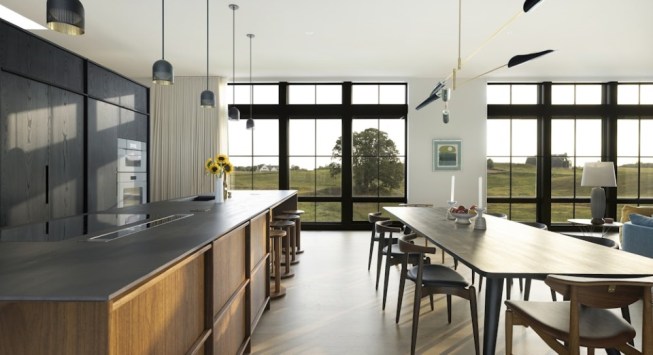
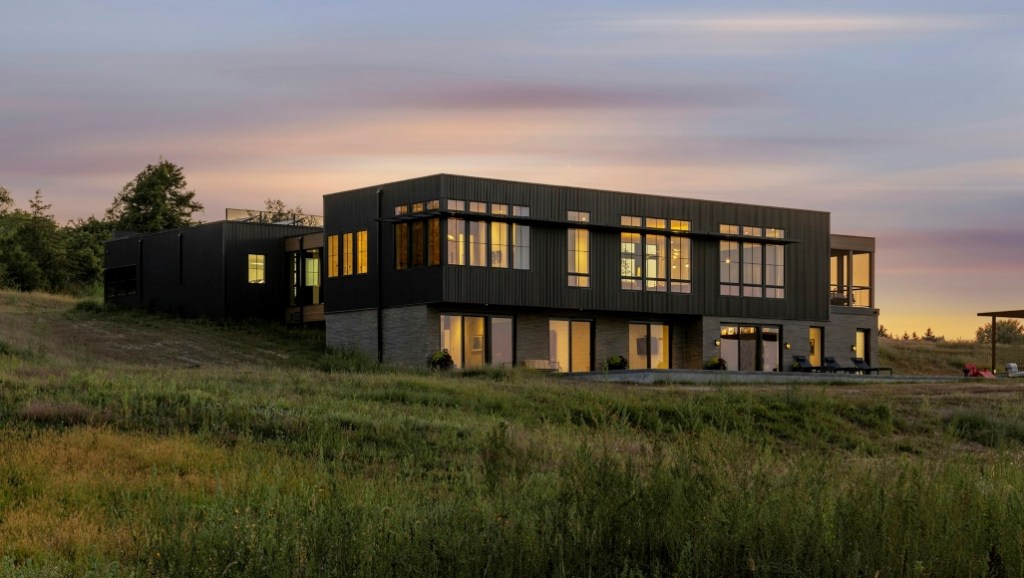
Photo by Spacecrafting
Building Envelope: Beyond Windows and Doors
Because windows and doors play such a critical role in performance, they naturally lead builders and homeowners toward other envelope improvements like insulation and cladding.
In fact, high-performance siding and sheathing systems can extend the life and durability of the entire structure. Whelan points to products like ZIP System sheathing as an example: “It’s just another way to again future proof by using a better product,” he says.
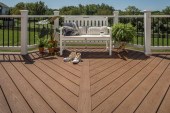
Composite materials—particularly in exteriors—have become another staple. “Using composite trim boards is future-proofing in itself, because you don’t have to worry about it rotting ever again,” Whelan says. Even decking follows the same pattern: “The lifespan of a deck with Trex—it’s forever.”
Energy, Comfort, and Systems Efficiency
As codes tighten and more states shift toward electrification, mechanical choices matter as much as envelope design.
Whelan notes this growing shift: “In New York… they’re getting rid of fossil fuel for stoves and for heating, so it’s going to be all electric,” he says.
Better envelopes reduce the load on these systems—meaning lower costs and fewer emissions over time. “You want to make it as efficient as possible … so it’s not overworking in order to make up what’s being lost,” Whelan explains.
Appert also points to advanced systems commonly used in architect-driven, sustainability-minded projects: geothermal, solar arrays, structural insulated panels (SIPs), and exterior foundation insulation. “The homes themselves have sustainability components and considerations,” he says, all designed “to future-proof our clients’ lives.”
Technology and Smart-Home Integration
Future-proofing isn’t just about materials—it’s also about how homeowners use their homes.
Advanced automation, particularly lighting and shade control, is emerging as an unexpected energy-saver. “If you have the ability to press one button and shut every light down in the whole house, you’re going to be more efficient with your energy use,” Appert says.
Whole-home control systems are increasingly showing up not only in luxury builds but also in mid-market homes as tech prices fall and homeowners push for smarter ways to reduce waste.
Accessibility and Aging in Place
Builders say the other major demand driving future-proofing is the desire to stay in the home longer—especially for aging boomers.
Whelan says bathroom renovations are a good example of this aging-in-place trend. Products like 3-foot-wide doors that allow wheelchair access, shower grab bars, and barrier-free shower pans are all great ways to future-proof.
Appert builds similar considerations directly into new homes—including wider doorways, zero-clearance entries, and recessed trusses for step-free garage access. “These are all very important considerations,” he says, particularly for multigenerational households. He adds that features like recessed trusses don’t cost a lot to include the design.
Why Future-Proofing Pays Off for Builders
Ultimately, offering future-proofed designs and products isn’t just a value-add for clients—it’s a strategic business decision. “With any option or any upgrade, there’s a profitability component. With every upgrade, you have a margin opportunity,” Appert says.
He also notes that offering thoughtful, future-focused solutions “will help attract a more educated client.” In turn, those clients value relationships and return for future projects. “You’re deepening the relationship beyond a transaction—you’re actually future-proofing your business,” Appert says.
Get Educated and Start the Conversation
The good news is that builders don’t need to overhaul their process to start future-proofing. Often, it begins with conversations—about performance ratings, materials, long-term energy use, and how clients plan to live in their homes.
The most important step, Whelan says, is staying educated about the ever-changing products, trends, and techniques. “We’re always learning about what’s out there that’s going to make homes better in the future,” he says.