WaterShed's rear elevation showing the butterfly roof, mechanica…
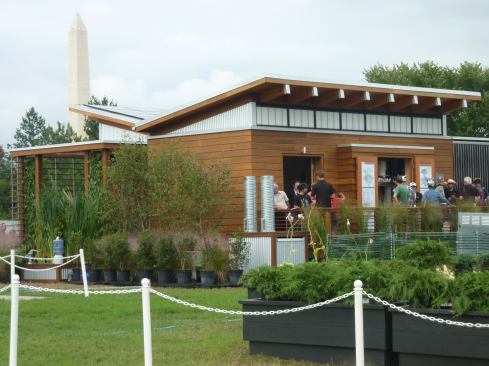
WaterShed's rear elevation showing the butterfly roof, mechanical closet, and solar collection tubes on back of courtyard wall.
Shelley D. Hutchins
Corrugated galvanized steel siding mimics the undulations of the…
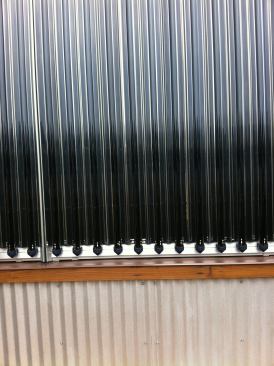
Corrugated galvanized steel siding mimics the undulations of the solar hot water collection tubes.
Shelley D. Hutchins
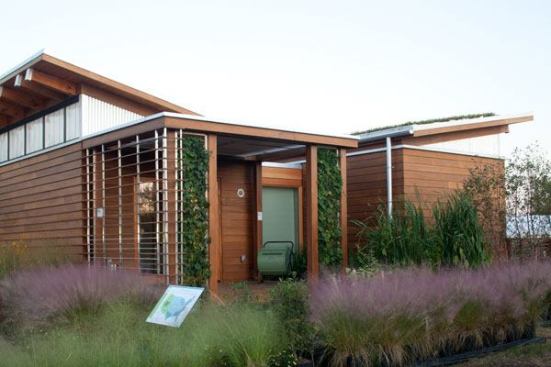
Purple-blooming, native Shenandoah grasses add color and textura…
Purple-blooming, native Shenandoah grasses add color and textural interest to the horizontal siding.
Jim Tetro
The open living space includes student-designed flexible furnitu…
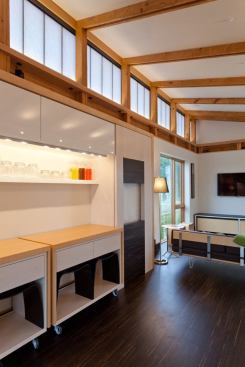
The open living space includes student-designed flexible furniture such as the rolling island/dining table/side board pieces.
Jim Tetro
The kitchen opens to a pergola shaded by edible vines like snap …
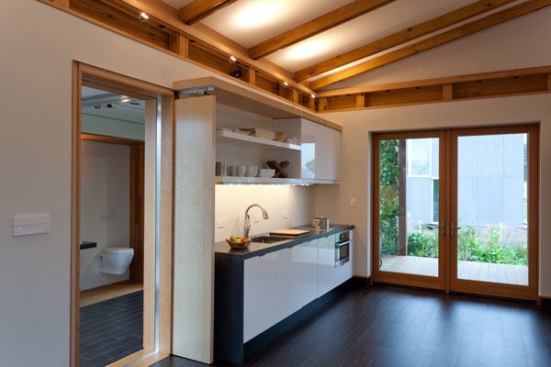
The kitchen opens to a pergola shaded by edible vines like snap peas and grapes.
Jim Tetro
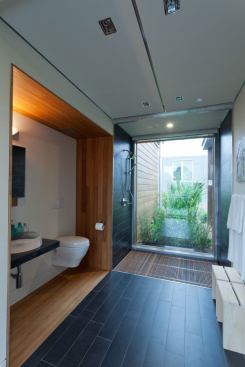
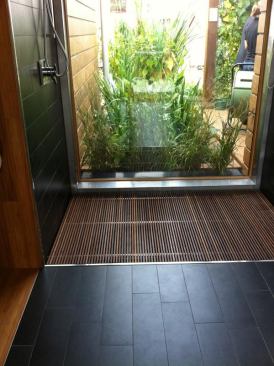
Flush flooring in the bath boosts accessibility.
Shelley D. Hutchins
A large window in the bathroom offers a view to the outdoors, wh…
A large window in the bathroom offers a view to the outdoors, while an on-site wetland helps filter and recycle greywater from the shower, clothes washer, and dishwasher.
Jim Tetro
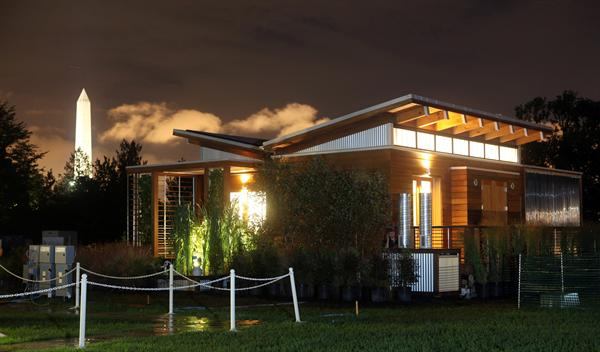
The home also features a green roof that slows rainwater runoff …
The home also features a green roof that slows rainwater runoff to the landscape and improves the house's energy efficiency.
Stefano Paltera/U.S. Department of Energy
The students designed WaterShed with a strategy that balanced tr…
The students designed WaterShed with a strategy that balanced tradition and technology. Inspired by the Chesapeake Bay ecosystem, the home is a model of how the built environment can help preserve watersheds by managing stormwater on site.
The 2013 Solar Decathlon will be held from Oct. 3 to 13 in Southern California’s Orange County Great Park. The traditionally sunny spot marks the first time the event will be held somewhere other than Washington, D.C., where it was launched in 2002. The park is located in Irvine, Calif., which averages about a half-inch of rain for the entire month of October. The 20 teams selected for the sixth Solar Decathlon should be relieved by that statistic given the wet cloudy days that made the 2011 event even more of a challenge. Nine of the 20 university teams will remember that rainy experience when they return for the 2013 competition.
One of those nine returning teams from 2011 is a partnership between the Southern California Institute of Architecture and the California Institute of Technology. In 2013, they will share home-field advantage with three new entrants: Santa Clara University, Stanford University, and the University of Southern California. The University of Maryland, the 2011 victor, will not be vying for a repeat title in the upcoming competition, but you can see their winning project in the accompanying slideshow.
Teams will build solar-powered, efficient, well-designed, affordable houses that demonstrate green building innovations. Builders, architects, engineers, and anyone interested in learning more about the latest technologies and techniques in sustainable design and construction can tour the houses over two long weekends. The solar village will be open 11 a.m. to 7 p.m. from Oct. 3-6 and Oct. 10-13. Other days the houses will be closed for performance testing and to track energy production and use under normal living conditions.