
Robert Barmore
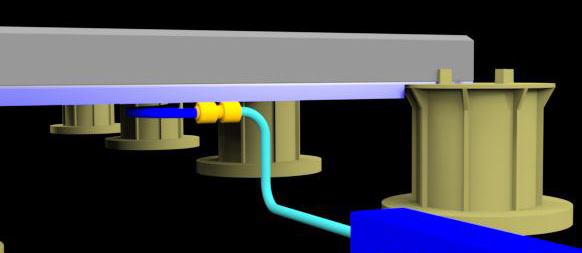
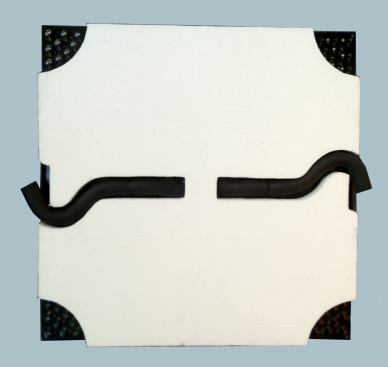
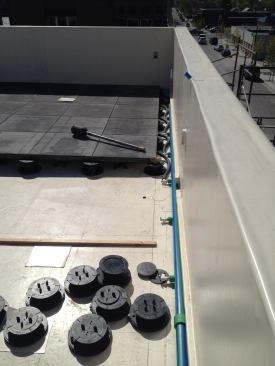
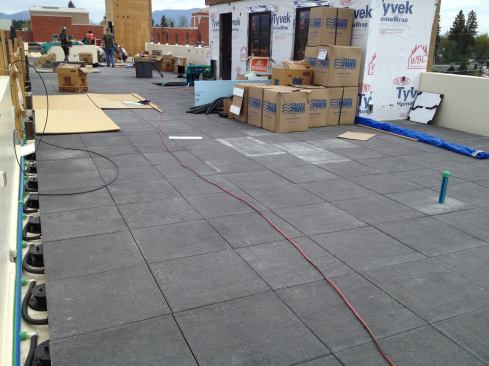
Each 23 ½-inch-by-23 ½-inch panel includes push-on…
What if you could have your solar collector and melt your snow, too? You can, thanks to a high-tech fix developed by Robert Barmore, a high-end builder turned green entrepreneur. Barmore realized the potential for a solar collector that had snow-melt capacity when building homes in Aspen, Colo.—where the sun shines as much as the snow dumps loads atop outdoor decks and sidewalks. His product—a paver that incorporates solar-energy collecting technology—gathers energy from the sun during the summer to heat domestic water and can be reversed during the winter to use geothermal energy to melt snow.
The trick, he says, was keeping the paver-cum-solar-collector cool enough to sit or stand on without hampering its functionality. Following five years of development and with $115,000 in funding from the Green Launching Pad program at the University of New Hampshire, the pavers recently were used in the full-scale retrofit of a bar and saloon in White Fish, Mont. The architect was after a snow melt system, but Barmore says he was able to convince the project team to put an array of pipes beneath the building that could serve as a geothermal heat sink—tempering fluid to 50 degrees—and tie that system into the roof.
“Architects are starting to recognize and understand [the product],” Barmore says. “Now that we are producing them they are starting to put them into projects.” Currently the product is sold directly to builders, but adding a sales team and bringing production in-house is part of Barmore’s plan to make the system available through more channels. “I like to solve problems, and this was a big one that I found,” he says.
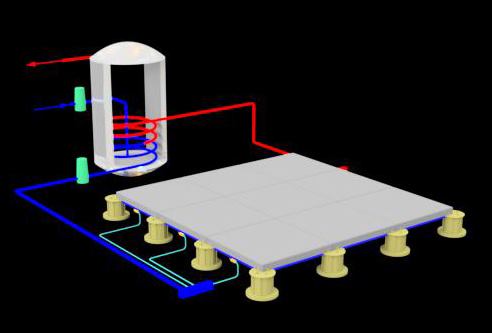
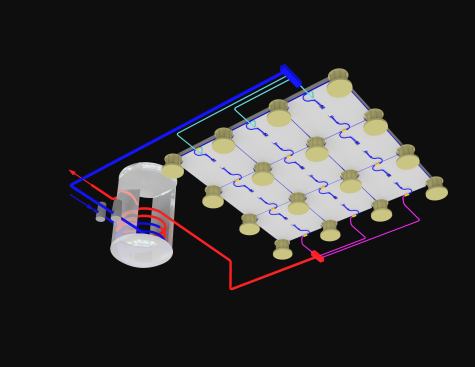
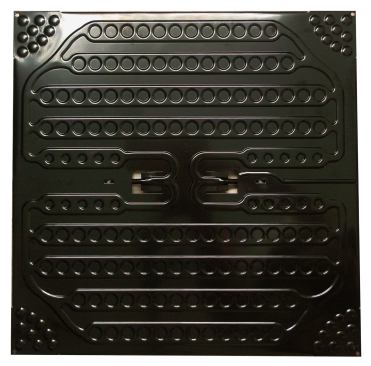
How it works: A modular heat-exchanger panel distributes a heating and cooling transfer fluid, either glycol or water, through fractal flow channels on the panel’s surface. The 23 1/2-inch by 23 1/2-inch panels use removable push-on connections that align the panels into rows. The rows send and return energy in manifolds to form arrays and have a shut-off valve on the send and return for easy installation and pressure testing. The manifold system is custom-designed for each project and uses an Aquatherm brand Climatherm weldable PP-R pipe. Removable connections allow for easy access to the surface below the system, including the roof and below-grade utilities.
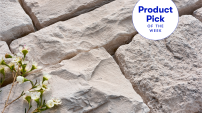
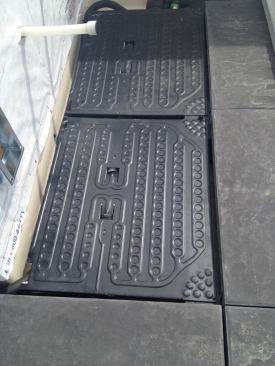
The high-density pavers are about 2 inches thick and each 4-square-foot component weighs approximately 90 pounds. The ThermaPaver system installs as pedestal- or ground-mounted pavers or stones, and it can be used on driveways, patios, sidewalks, plazas, and roads. Therma-Hexx, www.therma-hexx.com; 603.319.8815.