An Internet-based control world is looking more and more like the way of the future. EI encourages dealers to add the Life Controller to the product mix. “Not a PC but an appliance that runs Windows XP
Embedded, its job, 100 percent, is to manage the house,” Seamons says. The Life Controller is not exposed to virus threats or hackers through Internet browsing and e-mail as a standard PC would be.
For backup, EI recommends support products including the Lifestorage server, a 1.5-terabyte hard drive that provides redundant storage for music files, digital images, recorded TV shows, and videos. Another option for the entertainment experience: a Lifevision digital TV server that streams four video programs simultaneously, allowing family members to view different programs at the same time.
Seamons sees Lifeware as an extension of a structured wiring package. “It’s difficult for consumers to emotionally connect with copper wire in the wall,” he says. “Adding things that connect to copper wire—such as a Media Center entertainment package in the living room—becomes an emotionally connected sale for the customer,” he says. “They’re not looking at wire anymore. They’re looking at a whole new way to use the TV in the living room.”
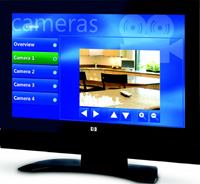
With a Category 5 cable network as the lifeline, a starter system might include a Media Center PC, 42-inch plasma TV, a networked camera at the front door, a single-zone music system with volume controls, a smart thermostat, and six light switches. A step-up package could include a Media Center PC, a 50-inch plasma TV, an Xbox 360, 28 light switches, two thermostats, three security cameras, and four zones of music.
Pricing for a Lifeware system typically runs $1 per square foot for a basic system to $2 per square foot for a complete installation. EI also offers homeowners three tiers of support packages beginning with automatic software updates which run homeowners 9 percent of the cost of Lifeware software per year. Lifeware software is priced according to the number of devices and clients on the network.
Control support runs an additional 12 percent of the software cost. If the light switch doesn’t come on when it’s supposed to, customers can call a support center for remote diagnostics. If it can’t be fixed remotely, the support center calls the dealer to arrange for a house call.
Media support covers issues with the PC, DVD player, or other entertainment-related problems. Media support runs an additional 9 percent of the software cost bringing a complete support package to 30 percent of the cost of the software per year.
Seamons sees consumer awareness and manufacturer support as key challenges to Lifeware’s success. “Manufacturers need to embrace WSD and put it on thermostats and on lighting control systems,” he says. “You can imagine the initial reaction from companies that are making proprietary products,” he notes. “They say, ‘If I subscribe to this common language, my competitors will be just as good as me.’”
EI hopes the rising-tide-raises-all-boats theory will take hold—a tough sell in an industry defined by proprietary, custom solutions. “When we create a platform where everyone can play, the consumer gets more opportunities and buys more so everyone sells more,” Seamons says. “As an industry we grow.”—Rebecca Day specializes in writing about home electronics. She can be reached at customhomerd@aol.com.