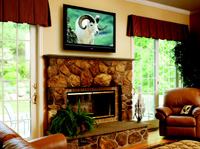
Another type of TV technology used for big-screen TVs is LCOS (liquid crystal on silicon), which JVC markets as D-ILA and Sony as SXRD. Alternatives to big-screen tube TVs, these technologies promise rich color and a smooth moving image. JVC’s latest 58-inch and 65-inch D-ILA TVs are built around an innovative mirror assembly that shaves a third off the depth of the TV cabinet. The cabinets measure about 11 inches deep, making them well suited to in-wall mounting applications.
Each system has benefits and drawbacks, although technology continues to improve on all fronts. LCD will remain the technology of choice for smaller TVs, 42 inches and under. The thin, lightweight panels make LCDs perfect for wall or cabinet-mounted kitchen and bathroom applications. Toshiba’s Real Steel TV is designed specifically to match the stainless steel appliances in contemporary kitchens. Companies including Seura sell TVs that double as mirrors when not in use, which are popular for upscale bathrooms. And combo units from Toshiba and Westinghouse that fit a side-loading DVD player into an LCD TV are perfect space savers for the bedroom or home office.
LCD TVs are known for their brightness which makes them good candidates for brightly lit rooms. Their contrast, however, has been an issue compared with plasma TVs that produce better detail in dark scenes and deep blacks. LCD TVs have been faulted for response time, too, which affects how motion is displayed on screen. Other technologies claim smoother motion in action and sports scenes, although LCD suppliers continually improve the technology.
Plasma TVs run very hot, requiring ventilation if mounted in the wall or in a cabinet. Plasma sets are heavier than their LCD counterparts, which could require additional bracing in the construction stage. Plasmas are also less efficient than other technologies. In a report on the energy efficiency of TVs, the National Resources Defense Council rates LCD, LCOS, DLP, and plasma TVs as very high, high, moderate, and very low in energy efficiency, respectively. While promoting its latest D-ILA TVs, JVC touted energy usage as an advantage over plasma. In testing, a JVC 58-inch TV used 230 watts of power compared with 683 watts for a comparably sized plasma display.
TV as we know it will complete its overhaul in two short years but there’s no reason to panic. Smart consumers can begin making planning decisions today that will carry them far into the digital future.—Rebecca Day specializes in writing about home electronics. She can be reached at customhomerd@aol.com.