Microsoft has been dabbling in home entertainment since the introduction of the WebTV and the original Media Center PC. The first, a set-top box for the TV, flunked the consumer satisfaction test, and the second has been slow to take as consumers have been slow to embrace the marriage of the PC and the TV. But the convergence we’ve been hearing about for nearly a decade is coming and maybe the third time—with a nudge from Microsoft’s Vista operating system—will be the charm.
The consumer version of Vista, due out in early 2007, is entertainment driven. It promises to enhance the capabilities of a Media Center PC, which stores digital photos, music, and both standard and high-definition TV.
Windows Vista and the Media Center PC are just the beginning of a whole plug-and-play world Microsoft envisions where devices can communicate with each other over the Web Services for Devices (WSD) cross-platform standard. WSD is a commonly accepted language that compatible products use to communicate on a network, eliminating the need for error-prone programming and drivers. Microsoft hopes to extend WSD compatibility to a wide range of products including printers, digital cameras, routers, and cell phones.
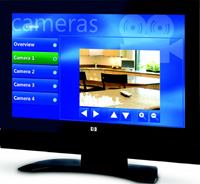
Now WSD is coming home. Exceptional Innovation (EI), a Columbus, Ohio–based technology company, has launched Lifeware, a WSD-based software package designed to extend the Media Center platform to home control. Lifeware adds control of lighting, security, temperature, and entertainment to the same user interface homeowners use to manage their TV shows, music, and pictures. Homeowners use the same remote control to choose music and set a lighting scene.
The company describes Lifeware as “software bridges” between compatible partner products that enable rapid two-way communications that are reliable and robust. Those communications can be activity-based scenes where several subsystems act as part of a macro command. In Leave mode, for instance, the security system arms, lights go off, thermostats set to a pre-determined level, and music shuts off. Through WSD, Lifeware is compatible with products from lighting companies Centralite, Vantage Controls, Leviton, and Insteon; audio companies Russound and Nuvo Home Audio; and HP Media Center PCs.
Traditional control systems can’t be installed cost effectively for a 3,000-square-foot home, according to Mike Seamons, vice president of marketing for Exceptional Innovation. “They’re far too high-priced for that kind of scale,” he maintains. “Lifeware can create a package that’s customized to the economics of any size home.”
As WSD capability is built into more subsystems—a crucial part of the equation—the benefits to homeowners and installers will increase since each new device or system is automatically discovered by the network. The simplified configuration and programming toolset built into Lifeware should cut down on the time installers have to spend in the field and reduce errors. Because the system is Internet-based, installers can upload configurations to the client’s network, which could save an expensive truck roll.
User interfaces include remote controls and homeowners’ TVs that are connected to the network via Media Center Extenders or an Xbox game player. Additionally, Lifeware touchscreen controllers are available for areas where TV control isn’t practical, such as a foyer. In the future PDAs and Web tablets will double as Lifeware remote controls—using the same intuitive interface to manage music, videos, pictures, and home control functions—from inside or outside the home.
For consumers and integrators wary of PC-based home control, they should know it’s already happening today. Crestron touchscreens, for instance, run the Windows XP Embedded operating system behind the scenes to “provide secure and reliable performance with full Web accessibility,” according to company literature.