The National Fenestration Rating Council, a non-profit organization serving window, door, and skylight manufacturers, lists 642 window manufacturers. Just sorting through window material options from those window makers can be a challenge.
For starters, there are vinyl, vinyl composites, and more recently fiberglass composite window materials. To underscore the growth, the indispensable bible for construction estimators, the 2018 MasterFormat, now includes an all-new division dedicated to composite window materials.
Abundant choice can mean a lengthier evaluation process. Where do you start selection? Brand reputation is one way. Another is assessing window material performance. A comparison of vinyl, vinyl/wood composites, and fiberglass window material across five performance categories – strength, finish, thermal efficiency, durability, and coastal weather resistance – is a compelling way to identify specification-worthy candidates:
1. Strength. Strength of the window building material matters. A stronger building material is more resistant to impacts, such as hail, wind, rain, or an errant baseball. According to ASTM D7137 testing, vinyl rates a 7.0 on the test scale, vinyl/wood composite a 5.675, and proprietary pultruded fiberglass from Marvin Windows and Doors called Ultrex fiberglass earns a top 40.14 rating. Learn more.
2. Finish. A superior window finish resists scratches, chalking, and fading even in dark colors. It’s also 100 percent paintable and requires no sanding, scraping, painting, or other maintenance. For example, an acrylic finish ensures long-term performance despite prolonged UV ray exposure. Be alert to finish thickness and third-party verification, such as compliance with AAMA 624 finish standards. Learn more.
3. Thermal Efficiency. Windows with low thermal conductivity help reduce heat loss and energy bills, as much as 34 percent for heating and 38 percent for cooling. Variable outdoor temperatures also subjects window material to constant expansion and contraction. That movement can lead to poor operation, leaky seals, and ultimately loss of structural integrity. For example, pultruded fiberglass expands and contracts at virtually the same rate as glass, so material movement is consistent and thermal seals are maintained through temperature extremes. Vinyl, by contrast, expands and contracts 8 times the rate of pultruded fiberglass, causing poor operation, leaky seals, and a loss of structural integrity. Learn more.

4. Durability. Vinyl is a thermoplastic material that can be formed or remolded with heat again and again. In extreme heat, windows made of thermoplastics could soften, melt, sag, and reform. In cold, they can become brittle and break. By contrast, thermoset composite materials, such as fiberglass, hold their shape and remain rigid, heat resistant, and non-corrosive under prolonged exposure to extreme heat. Ultrex fiberglass, for example, is reinforced with “… an extremely high density of braided fibers woven longitudinally into the profile,” says Kris Hanson, senior manager, Group Product Management at Marvin. “By embedding fiber rovings within the resin, the window maintains its shape and performance even in harsh climates.” Learn more.
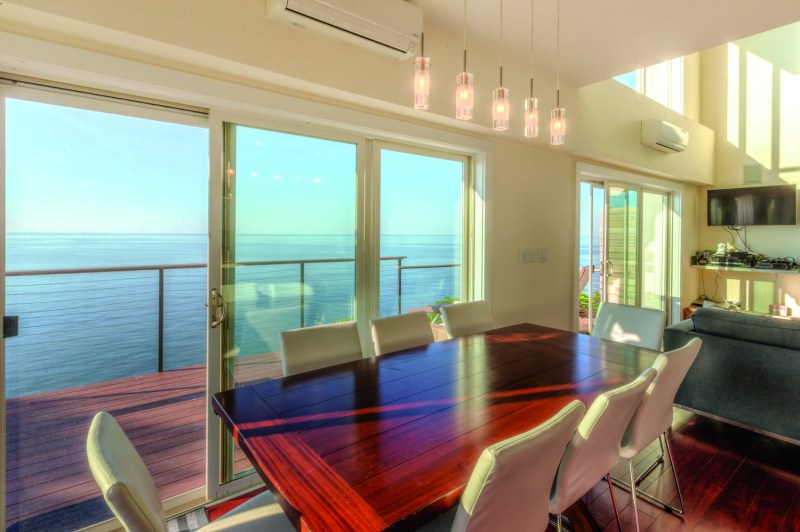
5. Coastal Weather Resistance. The harsh climates Hanson mentions includes the ceaseless coastal assault of sand, salt spray, UV rays, and punishing ocean storms. The tested resilience of Ultrex fiberglass to coastal conditions also applies to high-altitude mountain regions, hot desert climates, challenging four-season weather, and everything in-between. Learn more.
Selecting the right window building material for your projects should be an informed, deliberate process. Take time to identify the material that provides a balance of strength, finish, thermal efficiency, durability, and, as needed, coastal weather performance. To learn more, visit here.