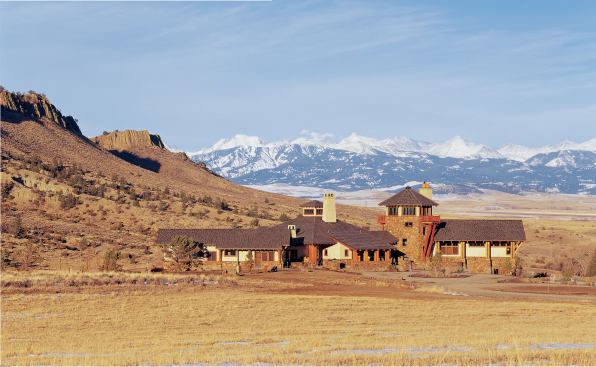
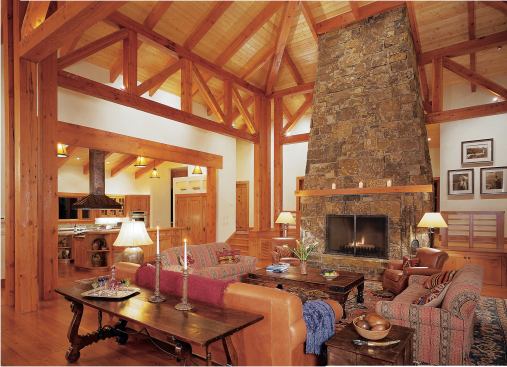
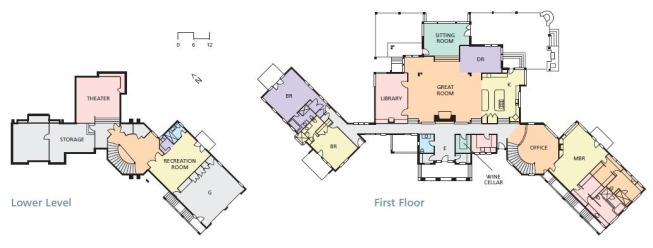
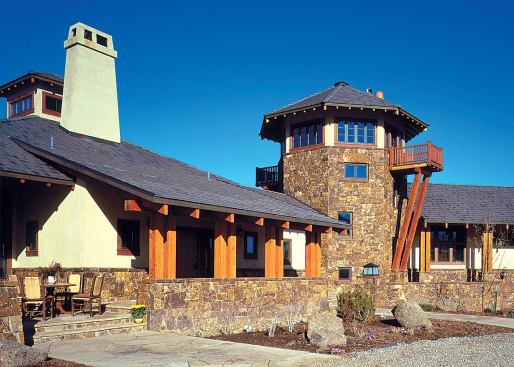
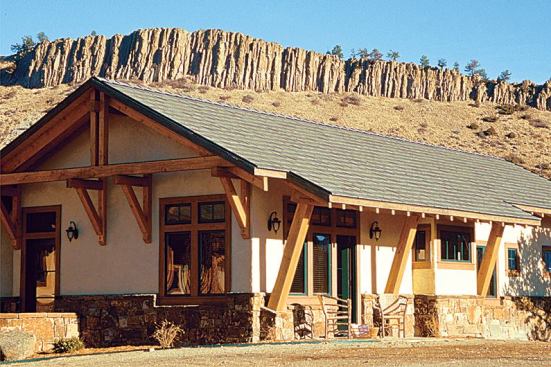
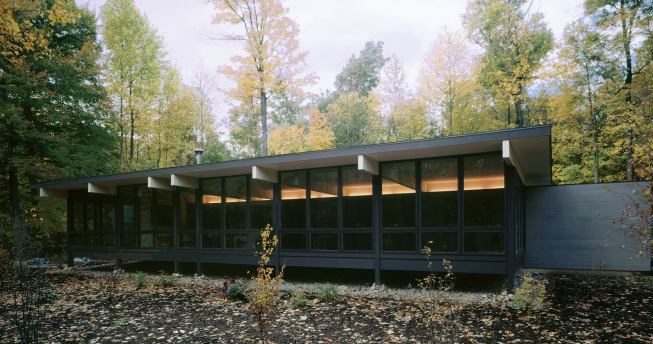
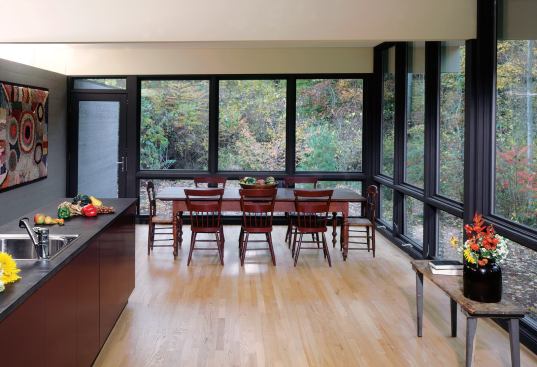
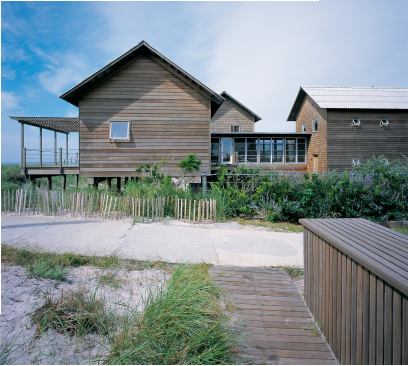
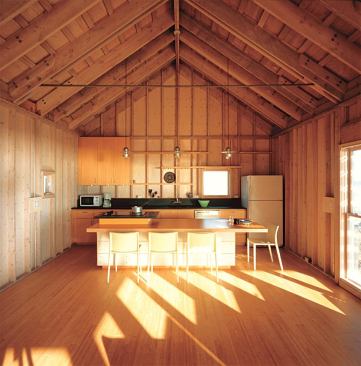
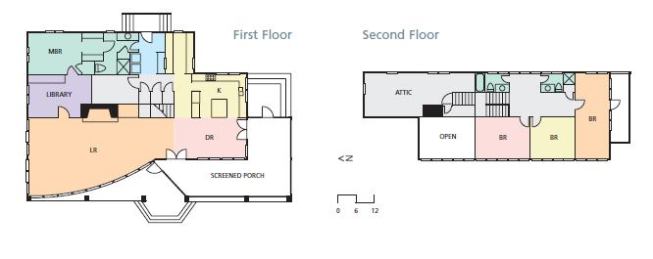
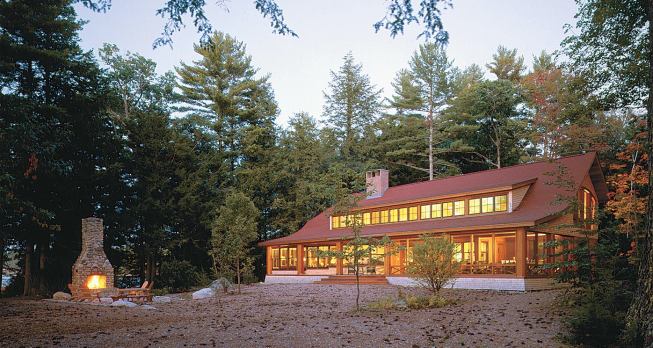
Located on 2,000 rugged acres, this Montana retreat may not be e…
In the custom home business, the term “dream house” is much bandied about. But let’s not fool ourselves; the real dream is a vacation home. Primary residences have to stay awake and keep their eyes on the ball. Commuting distance, school district, closet space, resale value—however elegantly addressed, these are simply not the stuff of reverie. Freed of such practical constraints, a vacation home responds to a different set of needs: for recreation, retreat, renewal, reunion. And perhaps due to the complicated times in which we live, when such needs are keenly felt, demand for vacation homes is running high.
This might come as something of a surprise. In an economy wavering between slow growth and recession, clouded by a terrorist threat at home and broadening military commitments overseas, the conventional wisdom would predict a slowdown in such discretionary spending. But while the custom home market in many parts of the country has slowed somewhat, especially at its upper reaches, the second-home market remains strong. National Association of Realtors principal economist Carter Murdoch notes a variety of factors, beginning with cheap financing. Interest rates remain low enough to keep the market percolating, in spite of soft corporate earnings and a weak employment picture. Perhaps more important to clients at the high end, real estate has become a prime refuge from the sluggish equity market. “When you look at the opportunity cost of keeping your money in the market,” Murdoch says, real estate becomes very attractive. And for clients diversifying their investments, adding a second home to the family portfolio is less disruptive than either remodeling or moving to a new home.
The NAR reports that in 2001, second homes represented 6 percent of the 6.2 million houses sold. U.S. Census Bureau figures show the number of seasonal homes increasing from 1.7 million in 1980 to 3.1 million in 1990 and 3.6 million by the third quarter of 2002. And Murdoch expects the trend to continue. “We’re modeling [interest] rates to stay near historic lows for the rest of this year,” which should keep this market “at or near historic highs.”
More power for the vacation home market comes from the custom builder’s long-time best friend, demographics. The NAR pegs the median age of second-home buyers at 61. In the coming decade, waves of baby boomers—the same cohort that has buoyed the housing market in general—will reach vacation-home prime time. Other demographic shifts fill out this rosy scenario. With grown children more likely than ever to scatter about the country, a vacation home often becomes a central gathering place, where a far-flung clan can meet for holidays and get in some sailing or skiing in the bargain. The technology that allows more and more Americans to telecommute to work can make any second home a third office. And with increasing numbers of successful Americans planning to work during retirement, that same technology will allow more and more to do so anywhere they like, and to begin the transition earlier in life.
Members of this same demographic segment have seen their mutual funds and 401(k) investments shrink considerably in recent years, and many have adjusted their retirement plans in the post-9/11 economy. But those adjustments may incline just as many toward taking the plunge on a second home as toward holding back. “That’s the ‘Life’s too short’ thing,” says Marcia Mogelonsky, a market analyst with consumer research firm Mintel. “They got hurt, but it was also a wake-up call, to do what you want now.” Clients willing to let their stock portfolios recover before embarking on a major remodel or a new move-up home may be less willing to defer a vacation home that is part of their overall life plan. “People also want to get away from the city,” Mogelonsky says. Especially in major cities, the threat—if not the expectation—of terrorism lurks in the background. A secure refuge is at least one fringe benefit of any rural retreat. As the projects on these pages illustrate, however, vacation homes remain much more than bomb—or tax—shelters. The best do what their breed has always done: allow busy owners to live a life that is different from the one they live at home. That program makes them perennial favorites among architects and builders. “We take them on because they’re interesting to do,” says Seattle architect George Suyama. “They’re more flexible in the architectural moves you can make.” For Suyama, the appeal of designing a vacation home lies not in how similar to a primary residence he can make it, but in how different. With clients, “I try to talk about making this place completely different in terms of the way you want to live. We talk about living in a simple way and reducing the amount of things you need.” In his view, a vacation home gives clients the perfect opportunity to shed—if only temporarily—the conveniences that insulate them from the natural world. “You don’t have to bring the car inside the house. You can leave it some distance away and walk, which heightens the experience. The contrast is what wakes you up.”
South Freeport, Maine, custom builder Peter Warren is another fan of vacation homes. That’s lucky for him, because his town enjoys three of the key attributes that draw such projects: outdoor recreation opportunities, water, and—with Boston three hours away by car—a major metropolitan center nearby. For Warren, one plus of these projects is the people involved: successful, mature clients, most of whom have been through the process before. “Some of our best clients come from that segment,” he says. “They’re bright; they’re fun to work with; they have the willingness to really pursue that process to a great result.” E-mail and digital photography take the strain out of communicating with owners who might go months between site visits. But the main attraction is the mission of the house itself. Planning a vacation home should lead clients to consider in some depth “the way they live and the way they want to live,” Warren says. “And they’re often two different things.” A vacation home holds the promise of erasing the difference. Get that part right, and you’re really talking dream house.