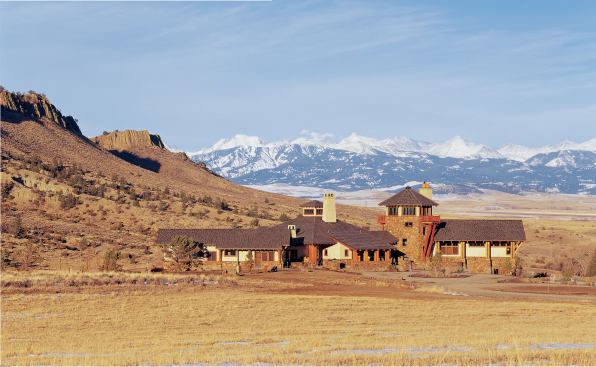
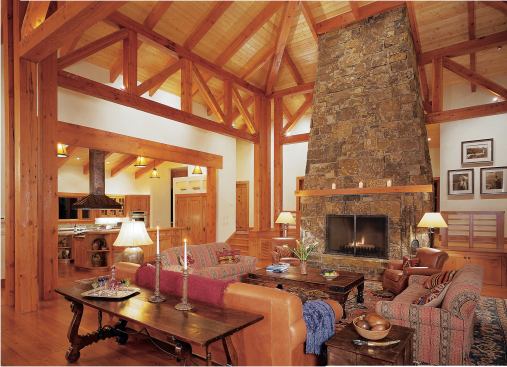
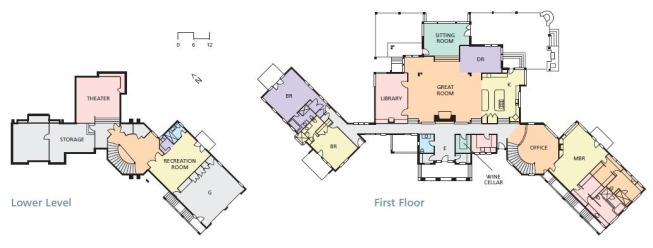
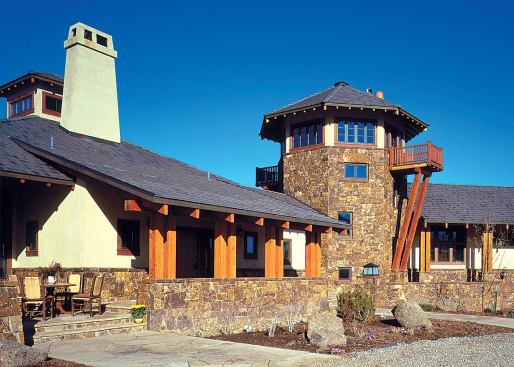
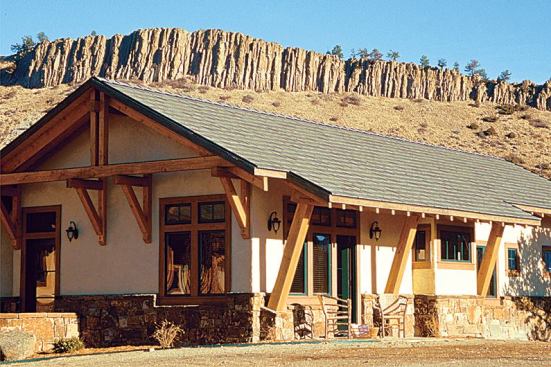
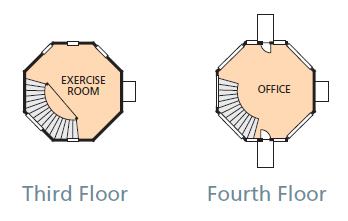
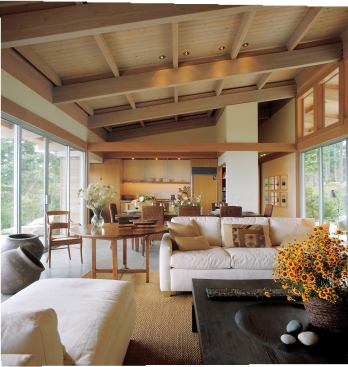
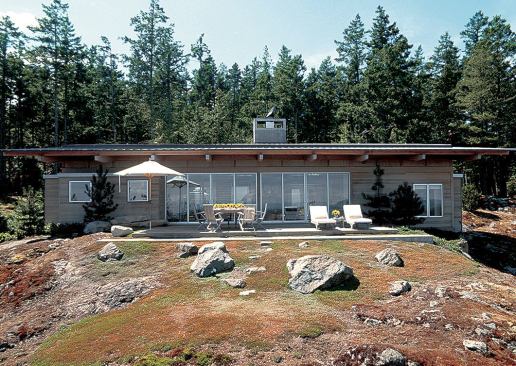
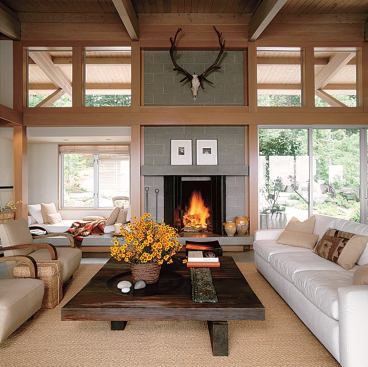
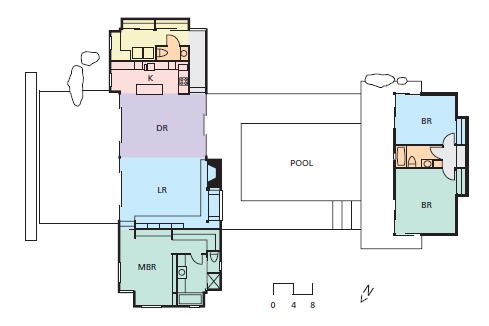
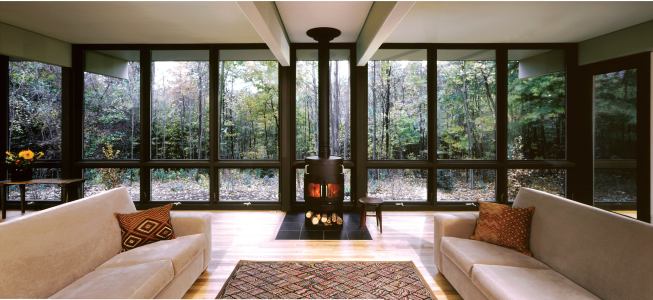
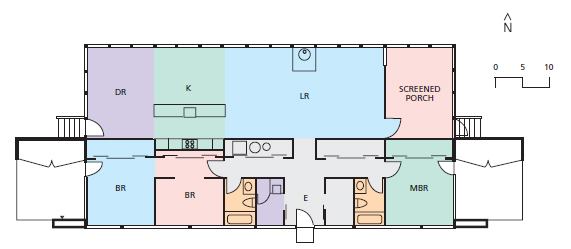
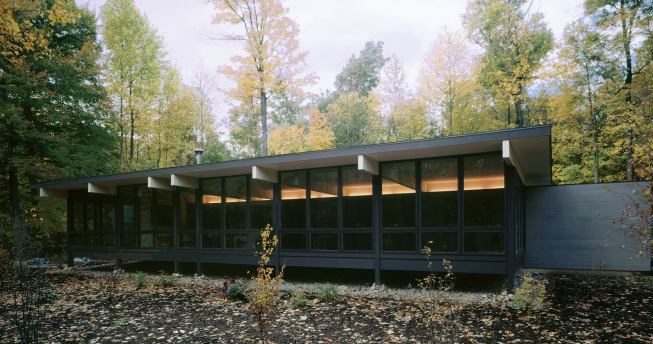
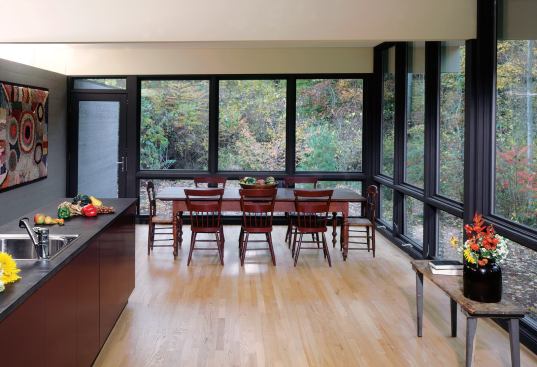
Located on 2,000 rugged acres, this Montana retreat may not be e…
Summer Break
Architect Fred Stelle got hooked on the romance of simple beach cottages—open-stud walls, simple furniture, a wood stove to take off the morning chill—during childhood summers on Cape Cod. But clients today lean toward year-round vacation homes, and the affordable waterfront property appropriate for basic, seasonal dwellings has all but disappeared. So Stelle relished the chance to design this summer retreat on New York’s Fire Island. Located in an older development of small lots and unheated cottages, its beachfront site strongly suggested a seasonal building. Not only that, Stelle says, the municipal water supply is turned off in the winter, “So [the clients] almost didn’t have a choice.”
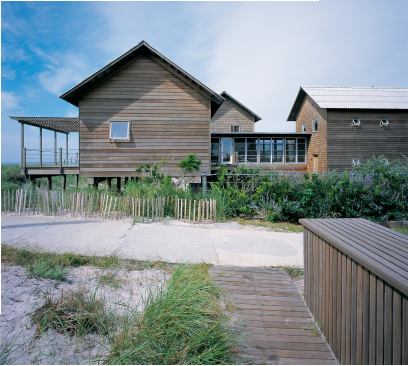
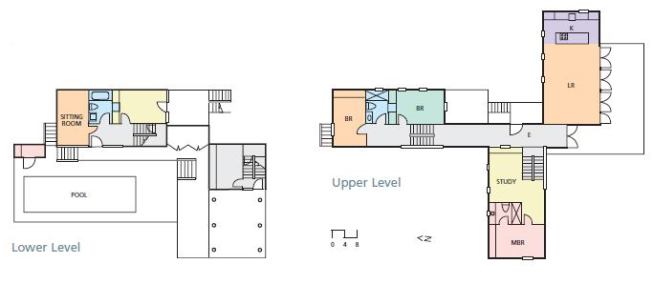
Stelle’s Modernist take on the classic beach house consists of three connected pavilions, arrayed in a pinwheel configuration that creates a number of sheltered outdoor spaces, including a pool deck that seems to float above the dunes. Code required that the house be elevated above its fragile site—”The house touches the ground very lightly,” Stelle says—but the resulting effect is aesthetically as well as ecologically positive, enhancing both privacy and the sweeping views out to sea.
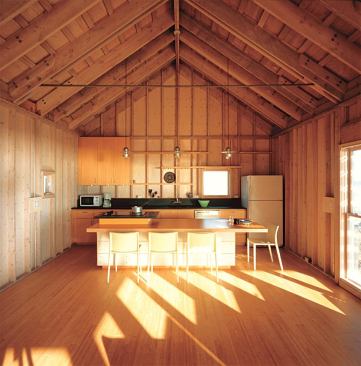
The building’s simple forms are dressed in materials that will stand up to salt air and Atlantic storms: red cedar siding, fiber-cement fascias, corrugated concrete roof panels, and bronze light fixtures made for marine use. In a nod to industrial chic, deck and stair rails are fabricated from 1-inch galvanized re-bar connected with thread-on nuts. Interiors are clean and spare, with exposed structural elements that are orderly enough to be decorative while conveying the informality that is this home’s reason for being. Says Stelle: “We wanted it to be easy, fun, light, just not take itself too seriously.” -B.D.S.
Project Credits: Builder: C&S Hemminger Construction, Buchanan, Mich.; Architect: Wheeler Kearns Architects, Chicago; Living space: 2,100 square feet; Site: .5-acre lot on a shared 360-acre property; Construction cost: Withheld; Photographer: William Kildow.
Resources: Entry doors/windows: Hurd; Fireplace: Rais; Hardware: Schlage; Lighting fixtures: Nulite; Refrigerator: Sub-Zero; Sheathing: Hardipanel; Stains: Cabot.
Lakeside Legacy
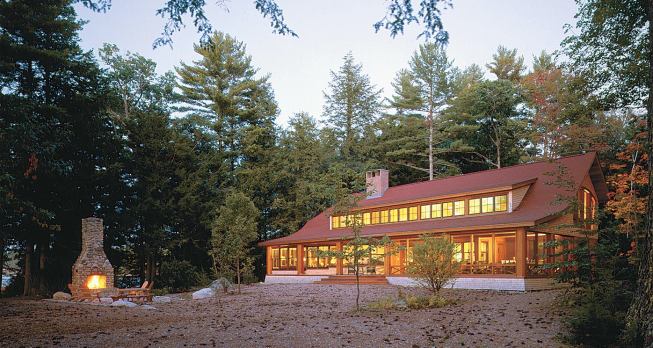
The family that owns this Maine lakefront property has been vacationing here since its youngest members’ great-grandparents found it in the 1940s. So when the cramped, rickety cottage that had served them all those years finally gave up the ghost, they knew the flavor they were looking for in its replacement: big enough for the extended family but unassuming when viewed from the lake, capable of year-round duty but with the feel of a summer place, reflecting a rustic lineage but without looking like a replica of anything.
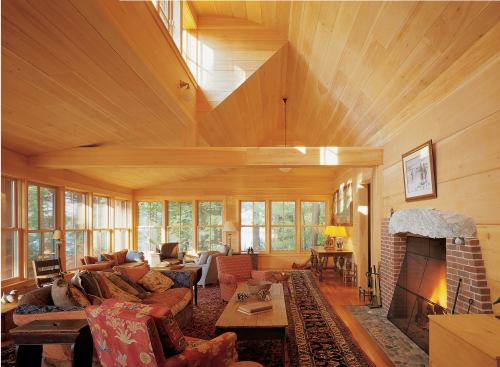
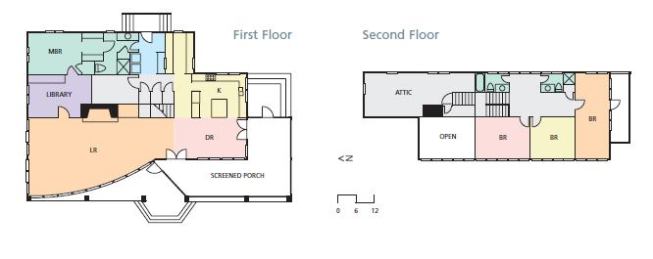
Architect Stephen Blatt, a man thoroughly steeped in the Maine cottage vernacular, scored on all three counts. Because the owners represent a clan of tall people, Blatt was generous with room volume, but to maintain the cottage tradition, he says, “This house had to have both coziness and loft.” To minimize the building’s perceived size, he oriented its long, high ridgeline parallel to the shore. The steeply pitched main roof sweeps to a low shed that shelters the living room, lakefront entry, and large screened porch. In a magnanimous gesture toward the lake, the owners agreed to forego the original building’s grandfathered site, only 50 feet from the water, in favor of a less intrusive spot at the 100-foot setback line.
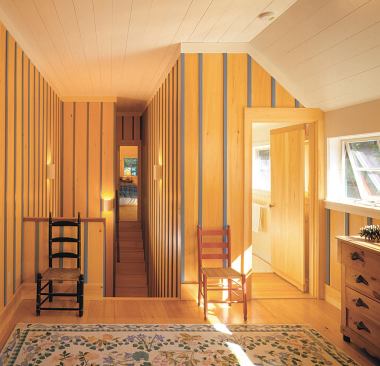
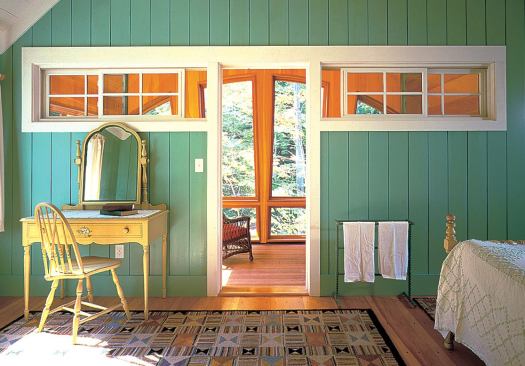
Inside, the house interweaves traditional motifs—two-over-two sash, painted wood cabinets, a river-rock hearth—with more contemporary moves made possible, Blatt says, by “a dozen pieces of strategic steel, which allow the house to be as light as it is and as large as it is.” Even with its energy-efficient building shell and in-floor radiant heat, this remains unmistakably a cottage. Among the many touches that reinforce that identity, one rule was paramount, Blatt says: “Zero Sheetrock. Every wall, every ceiling, every floor is wood.” -B.D.S.
Project Credits: Builder: Warren-Hall, South Freeport, Maine; Architect: Stephen Blatt, Portland, Maine; Living space: 3,700 square feet; Construction cost: $200+ a square foot; Photographer: Brian Vanden Brink.
Resources: HVAC equipment: Wirsbo; Roofing: IKO; Windows: Kolbe & Kolbe.