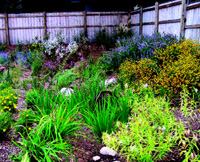
What do you get when you dig a shallow ditch in a low spot on the lawn, mix in some organic matter to create good drainage, and add shrubs and perennials that aren’t fussy about wet roots? A rain garden—a colorful idea that’s becoming chic for homeowners and builders alike. It’s a quixotic-sounding concept, but one that makes good ecological sense. Most new-home clients assume that the rain that falls on their property seeps into the ground, if they think about it at all. But water flowing off downspouts and driveways can’t be absorbed fast enough in a downpour. It finds its way into the storm sewer and eventually empties into rivers and streams, carrying with it a noxious cocktail of chemicals. Even relatively small storms disperse contaminants far and wide. Studies show that the first inch of rainfall is responsible for most of the pollutants in storm water.
A residential-size rain garden, by contrast, is a miniature purification factory. It allows about 30 percent more water to soak into the ground than a conventional lawn does, according to the Center for Watershed Protection in Ellicott City, Md. The depression traps the excess water, and the plantings—usually natives or well-adapted immigrants—simulate a forest environment, filtering pollutants. As the water settles, plant microbes and chemical reactions in the soil absorb and purify all sorts of toxic sediment, from construction waste to automotive chemicals, road de-icing salts, heavy metals, and lawn and garden pesticides. After a good scrubbing, the water perks down into the underground streams, which are important during a drought.
Rain gardens are being embraced by eco-conscious homeowners who like the way they look. A quick Google search shows the plots cropping up in states from Minnesota to Maryland. They’re even being adapted to desert regions as a solution to runoff from seasonal storms. “Rain gardens are becoming hot, especially in new developments,” says Ann English, a landscape architect at the American Horticultural Society in Alexandria, Va. “I think there’s an environmental interest on the part of homeowners, and municipalities are establishing stricter storm water requirements.”