While it’s easy to be seduced by the offerings of the local nursery, urge your clients to observe the materials that occur naturally in their landscape—assuming they haven’t been erased. “Don’t bulldoze everything away,” Franklin admonishes. “The homeowners need a vocabulary to work with. At the seashore it’s sand, bleached wood, and vegetation that’s tight and shiny, because that’s the way it protects itself from drying out. The Northeast has tall trees with great big flappy leaves and five layers of understory.
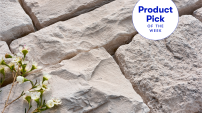
“If you’re lucky enough to have big rocks, encourage the homeowners to use them—maybe for seating as part of the terrace,” she continues. “Don’t just blast them away to have a carpet of lawn, but include them in an imaginative way to enrich the landscape. It makes each landscape different, and people want individuality.”
A natural vegetative strategy includes planting the property’s edges and getting the neighbors to do the same—a technique known as borrowed landscape, which creates the illusion of a larger lot. Treat the lawn like an area rug, basing its size on what is needed for the dog, kids, cocktail parties, or a vegetable garden. And Franklin will not abide some things that people are determined to have. One is foundation plantings, typically bushes clipped into balls with flowers planted in between. A hodgepodge of horticultural ornament at the base of a house looks “like parsley around the pig,” she insists, cutting it off instead of making it part of the larger property. “It makes the house look so shoddy,” Franklin says. “A woman looks glamorous when she wears a few elegant things with long lines. It’s the same thing exactly.”
Mulch, that staple of American gardens, is another big no-no. That’s a radical but welcome idea: Who wouldn’t like to skip the driveway delivery and the backbreaking shoveling? With her practiced eye, Franklin observes that there are no bare spaces in nature. “In the forests, before we killed them, every inch was filled with flowers and ferns,” she says. “Mulch is only used between plants plunked here and there. The whole approach is wrong.” Instead, she advises gardeners to fill space with whatever asserts itself in the wild: a mix of sand, twigs, and bleached leaves at the seashore; meadow grasses in the Midwest; wildflowers, ferns, grasses, or woody ground covers in the Northeast; or leaf litter and pine needles between plants until they get established.
While garden-making is outside the scope of most builders, what they can do is leave enough natural vegetation so that the landscape has a character, something the owner can use to return context to their plot. “You’re not trying to sterilize; that’s the old procedure,” Franklin says. “The new procedure is to foster individuality and quirkiness, responding to the climate or region.”
Cheryl Weber is a contributing writer in Lancaster, Pa.